Andy Burnham taking time away from public duties after his father’s death is understandable. Losing a parent is painful, and bereavement leave should not be mocked simply because someone holds public office.
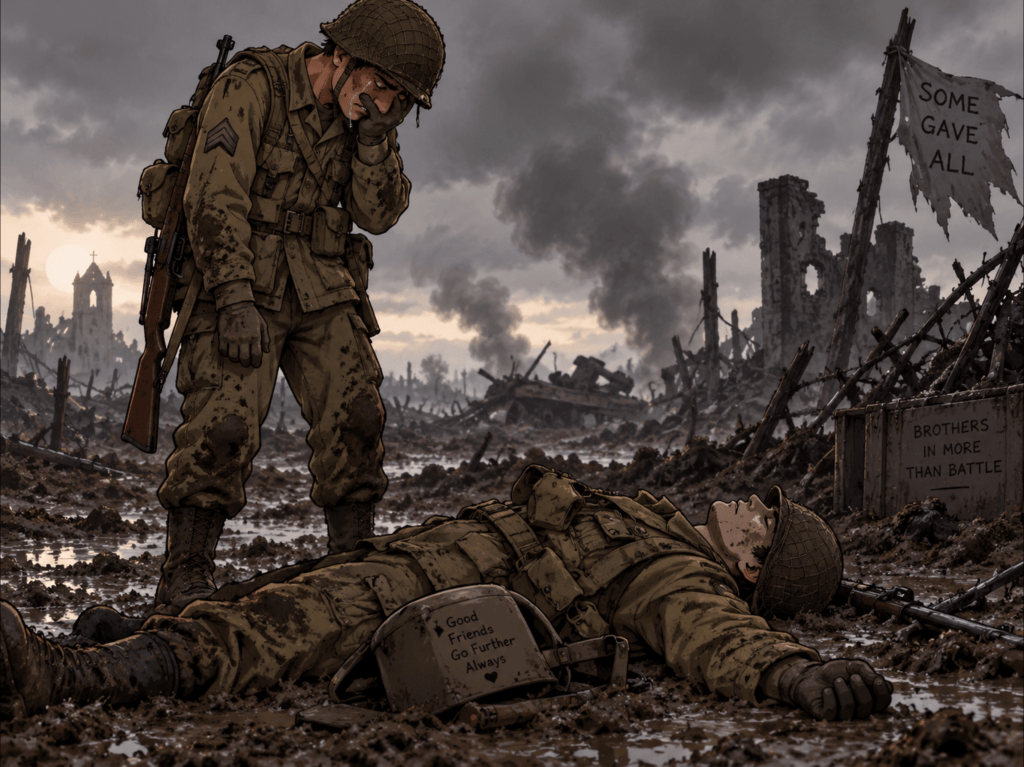
But the contrast becomes uncomfortable when politicians help shape wars while soldiers live with the consequences of those decisions. A politician can step away from the diary to mourn. A soldier may watch a friend die beside him and still be expected to return to the line.
Somewhere in Ukraine, a soldier will be grieving the person who stood beside him only hours earlier. There is no guarantee of a quiet room, a cleared schedule or several days to process the shock. The next patrol may still be required. The next attack may still come. War does not pause because grief has arrived.
🕊️ The People Who Decide on War Should Work Harder for Peace
Governments launch, fund and prolong military operations. Politicians speak of courage, duty and national sacrifice from secure offices, surrounded by advisers, officials and functioning coffee machines. Soldiers encounter those words in trenches, ruined buildings and battlefields where the person beside them may not survive the day.
That does mean politicians should be more cautious before presenting war as though its burden is shared equally.
A political leader may risk a career, a reputation or an election. A soldier risks physical injury, psychological trauma and death. Those are not equivalent burdens, however often speeches place them beneath the same patriotic banner.
When politicians say, “We must remain resolute” or “Sacrifices will be necessary,” the obvious question is: necessary for whom?
For soldiers, the battlefield is not an abstract national symbol. It has names and faces. It is the friend whose equipment was beside theirs, the colleague whose family is waiting for a message, the person whose absence becomes impossible to ignore when the unit moves on.
After that death, there may be no official pause and no carefully rearranged schedule. There may simply be another order to follow.
The public may pay through taxes, prices or political uncertainty. Soldiers may pay by carrying the memory of a friend’s death for the rest of their lives. Their families may pay through fear, grief and the permanent knowledge that a decision made far away placed someone they loved in danger.
That is why peace should not be treated as a soft alternative to courage. It should be the first responsibility of anyone with the power to send others into danger.
Negotiation may be mocked as weakness. Restraint may be dismissed as cowardice. Diplomatic compromise may sound less impressive than a speech about standing firm. But no battlefield speech can bring back the dead, and no patriotic slogan can repair a family permanently changed by war.
Before another leader praises sacrifice from behind a lectern, the public should ask whose sacrifice is being discussed. Is it the sacrifice of political convenience, public approval and electoral prospects? Or is it the sacrifice of the soldier who loses a friend and is still expected to return to the line?
More importantly, before another decision sends people towards another battlefield, leaders should be asked what they have done to prevent war, exhaust diplomacy and pursue peace.
There is a world of difference between cancelling two days in a diary and discovering that the person beside you has no days left at all. The first is a private tragedy. The second is the consequence of decisions made by people who should have worked harder to prevent it.
🔥 Challenges: Should Peace Come Before Political Prestige?
Politicians should be allowed to grieve, but should leaders who shape military decisions place a far greater emphasis on preventing war before praising sacrifice? Do those making decisions from safety truly understand what they are asking others to endure? Share your view in the Chameleon News blog comments. 💬🔥


Leave a comment