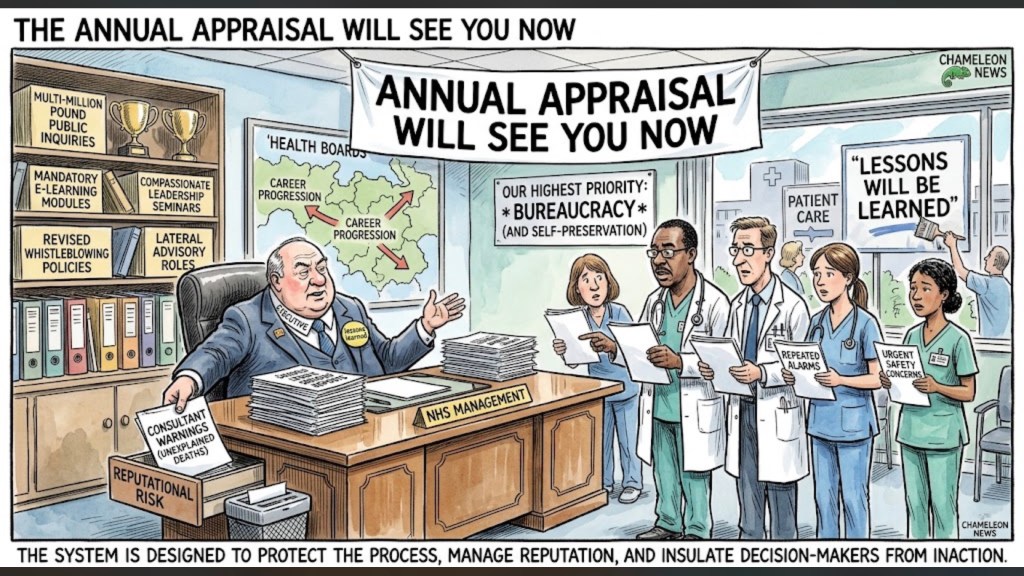
When the most catastrophic failings occur within the NHS, the institutional response is as predictable as it is terrifying: a blizzard of press releases, an immediate retreat behind human resources jargon, and the solemn announcement of a sweeping inquiry.
The tragic case of Lucy Letby exposed the absolute worst nightmare of modern public administration—a scenario where multiple senior consultants repeatedly raised desperate, explicit alarms about an unprecedented cluster of unexplained infant deaths, only to be met with managerial hostility, forced apologies, and requests to “respect tribunal processes.” Yet, true to form, the primary focus of the bureaucratic machine remains firmly on procedural etiquette rather than immediate clinical reality.
Mandatory Training for Mass Misconduct
What are the authorities doing about it? They are doing what authorities always do when caught flat-footed by structural incompetence: they are holding meetings, commissioning multi-million-pound public inquiries, and drafting updated governance frameworks.
The public is promised a radical overhaul of hospital culture. Trust boards will issue revised whistleblowing policies. Executive directors will undergo refresher seminars on “compassionate leadership.” Consultants will be given shiny new digital portals to report safety concerns, complete with drop-down menus and a 14-day standard SLA for an automated acknowledgment. Every level of management will assure us that safety is their “highest priority,” right up until the moment an unscripted emergency threatens the quarter’s efficiency targets.
And then what? What actually changes?
After the headlines fade, the legal fees are settled, and the solemn press conferences end, the real-world outcome will almost certainly be a monument to administrative inertia. The executives who presided over the silence will quietly transition to lateral advisory roles, take early retirement on full pensions, or emerge unblemished as chief executives of adjacent health boards two counties over.
The ultimate penalty for structural negligence in the public sector remains the immortal, bulletproof phrase: “Lessons will be learned.”
Nothing strikes fear into the heart of a broken systemquite like a mandatory eLearning module. The contrast between the sheer horror of the events and the breathtaking modesty of the administrative consequences exposes the fundamental truth of modern governance: it is a system designed to protect the process, manage reputation, and insulate the decision-makers from the consequences of their own inaction.
If the NHS is to protect patients rather than board reputations, the solution is remarkably simple: direct, personal accountability for executives who ignore clinical warnings, mandatory reporting laws with criminal penalties for managerial cover-ups, and an immediate end to the cozy carousel of recycled health administrators. Until managers face the same professional and legal risks as the doctors and nurses on the ward, the institutional response to catastrophe will remain nothing more than expensive theater.
In the end, we are left with a system where clinicians need a risk-assessment form to blow the whistle, but executives only need a PR firm to blow off the blame.
🔥 Challenges: If hospital executives faced personal legal liability or pension forfeitures for ignoring explicit clinical warnings, would managerial culture change overnight—or would we simply run out of executives?
What do you think? Drop your thoughts, like, and share this article to join the debate on the Chameleon News blog!
🏆 The best comments will be included in the magazine.


Leave a comment