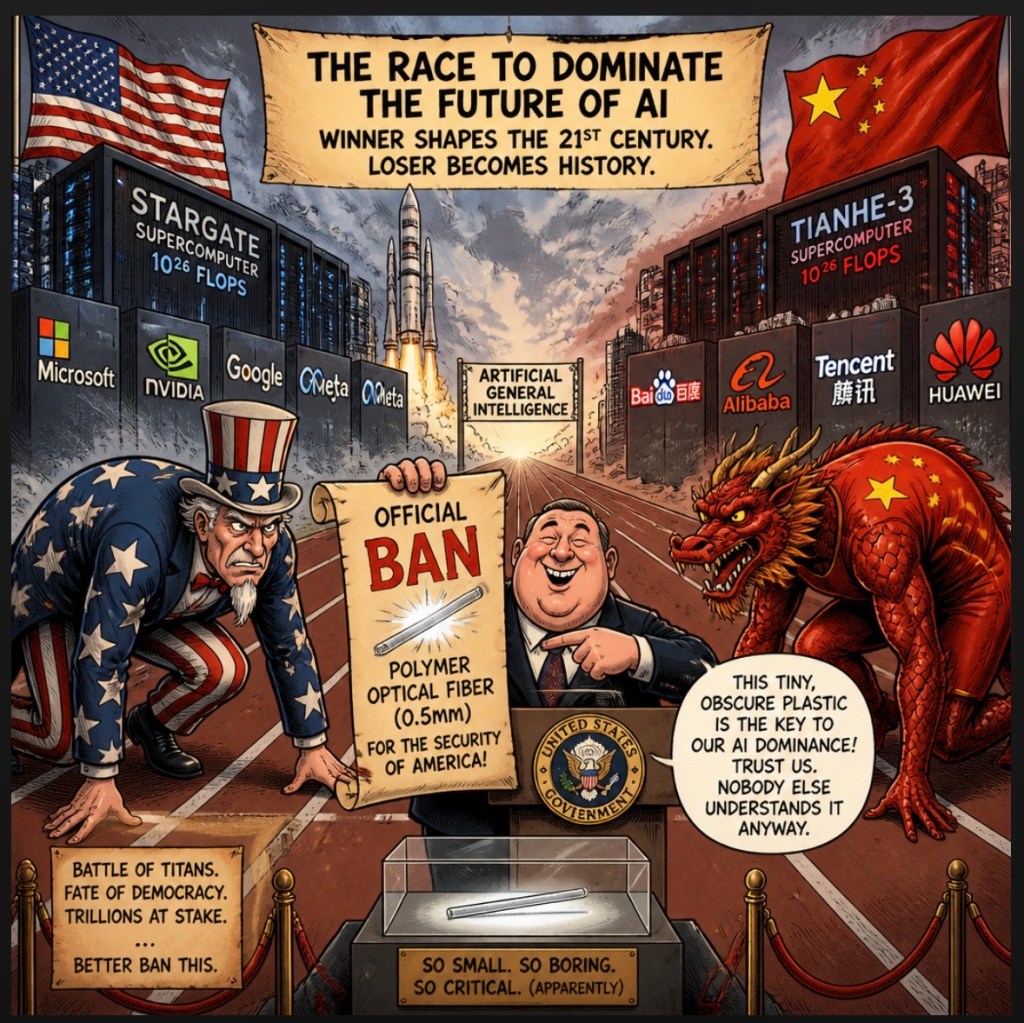
America is locked in a high-stakes existential race with Beijing to dominate the future of artificial intelligence. It is a battle of titanic proportions, defined by vast supercomputers, trillion-dollar tech conglomerates, and the fate of western democracy itself. So naturally, the United States government has decided the single best way to secure victory is by heroically banning a tiny piece of fiber-optic plastic nobody outside an engineering lab has ever heard of.
Unplugging the Empire to Save the Future
Federal regulators have set their sights on optical transceivers—pocket-sized translation dongles that turn electrical signals into flashes of light so server racks can talk to one another. Washington’s fear is as predictable as it is dramatic: if a data center uses a Chinese transceiver, Beijing might magically manipulate the light pulses to steal trade secrets, deploy malware, or shut down Silicon Valley’s latest buzzword generator.
The strategy is breathtakingly simple: to protect the crucial infrastructure powering America’s digital tomorrow, the state will ban the very components needed to build it today.
Because while the White House wants to build AI data centers faster than humanly possible, China currently manufactures the vast majority of the components required to plug them in. Removing Chinese suppliers instantly leaves tech giants with a minor tactical issue: nobody else on Earth makes enough of the bloody things. But rather than let that derail the grand strategy, Washington has bravely opted to move forward anyway, effectively declaring war on its own supply chain to teach the enemy a lesson.
It is the geopolitical equivalent of discovering your chief rival manufactures half the screws for your new house, throwing them in the bin in a fit of patriotic rage, and then sitting cross-legged in the rain waiting for someone to build a local screw factory.
And then what?
What actually changes?
While the Federal Communications Commission spends months drafting aggressive new guidelines, issuing terrifying national security warnings, and holding triumphant press conferences about safeguarding the homeland, the real-world result will be wonderfully familiar. American AI expansion will slow to a crawl, component costs will skyrocket, and tech titans will spend the next five years filing endless compliance exemptions to buy the exact same transceivers through a third-party distributor in Vietnam at three times the price.
Instead of grand technological dominance, the end result of all this bureaucratic grandstanding will be a mountain of paperwork, delayed construction sites, and a sternly worded policy document declaring that “lessons have been learned about localized manufacturing logistics.”
If the United States genuinely wants to secure its technological supply chain, the solution isn’t to stage high-profile regulatory raids on minor components before domestic alternatives even exist. It is to build actual manufacturing capacity at home before severing ties with the people who currently build everything.
Until then, Washington can celebrate its decisive victory over the humble fiber-optic plug while the rest of the world watches the world’s leading superpower get outsmarted by a lightbulb.
🔥 Challenges: Is Washington actually protecting Western security by banning Chinese hardware, or is this just costly political theater that actively hurts Western tech? Let us know your thoughts on the Chameleon News blog!
Enjoyed the read? Like, comment below, and share this article with your network!
🏆 The best comments will be included in the magazine.


Leave a comment