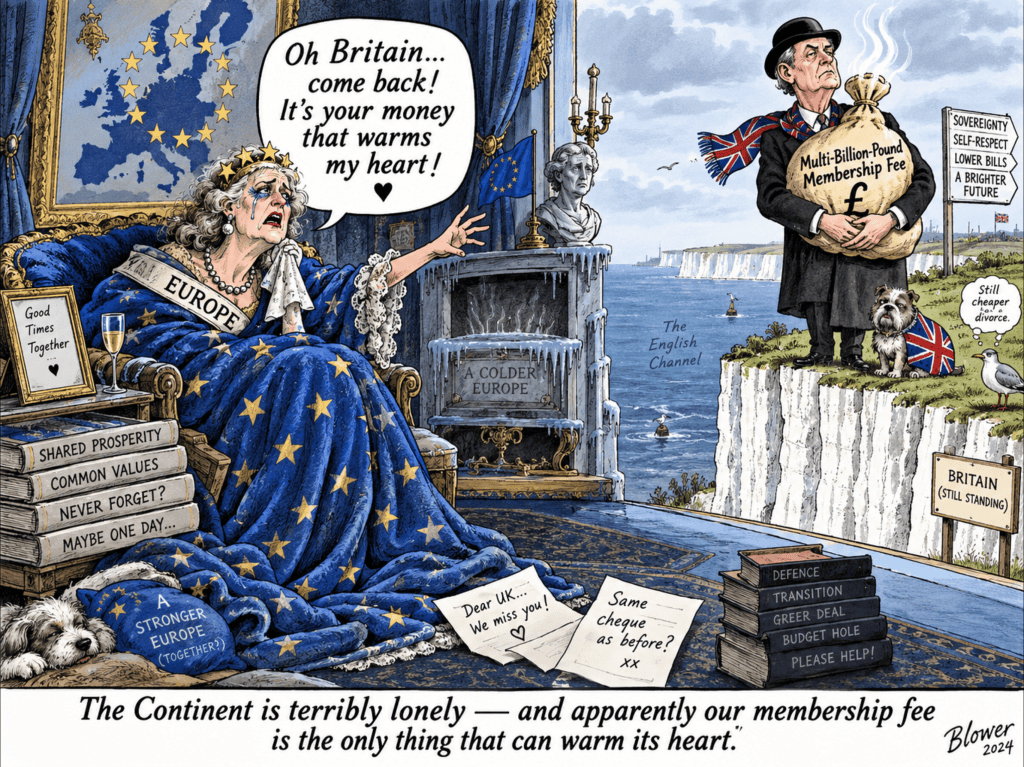
The Continent is terribly lonely, and apparently, our multi-billion-pound membership fee is the only thing that can warm its heart.
Gabriel Attal, Emmanuel Macron’s dutiful protégé, has generously invited Britain to join a brand-new, ultra-exclusive club: a “United States of Europe.” It’s an inner core of eight to ten like-minded nations designed to integrate further, move faster, and presumably sign off on harmonised regulations for standardized European standard-sized bananas before breakfast. In what is being framed as a grand diplomatic gesture, France is handing us a second chance to embrace the grand European project. In reality, it looks suspiciously like Brussels staring mournfully at a gaping hole in its annual balance sheet and missing the UK’s direct debit.
Naturally, this proposal is being met with the full weight of modern institutional theatre. Diplomats are clearing their diaries for high-level summits, think-tanks are churning out white papers, and Westminster commentators are warming up for another round of hysterical broadsheet hand-wringing. Whitehall will inevitably commission an independent panel to assess the strategic implications, ministers will draft endless position papers, and political aides will spend months debating whether joining a “United States of Europe” violates the exact constitutional nuances of “taking back control.”
And then what? What actually changes?
After the inevitable months of televised debate, endless subcommittee hearings, emergency press conferences, and millions spent on legal consultants, we will end up right back where we started. Britain will politely decline full integration, opt for a vague “special observer status,” sign a non-binding memorandum of understanding regarding shared standards on tractor emissions, and promise to hold further discussions in two years’ time. Meanwhile, the underlying reality—that the EU misses British money far more than it misses British diplomacy—will be neatly swept under a rug woven by a Brussels-approved harmonisation committee.
The practical solution, of course, isn’t complex diplomatic origami or inventing new tier-two memberships for former members. If European leaders want genuine cooperation on defence, trade, and energy, they can build straightforward, bilateral agreements based on mutual commercial benefit and clear, enforceable terms—without needing to invent a brand-new federalist superstate just to trick Britain into subsidising continental infrastructure again.
Ultimately, after all the legal posturing, emergency summits, and high-minded rhetoric about a shared European destiny, we are left with the ultimate institutional irony: a grand plan to drag Britain back into Europe that achieves nothing more than a fresh stack of meeting minutes and an astronomical invoice for diplomatic catering.
🔥 Challenges: Should Britain accept France’s invitation to join an inner-core “United States of Europe,” or is this just another bureaucratic attempt to get us paying into the EU budget again? Let us know what you think on the Chameleon News blog!
Like, comment, and share this article to join the debate!
🏆 The best comments will be included in the magazine.


Leave a comment