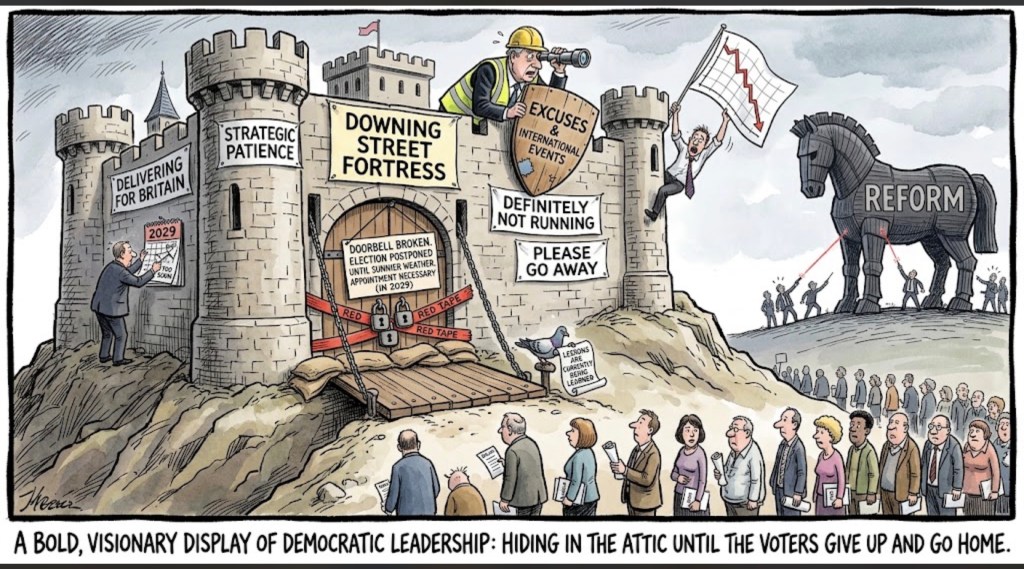
It is rare to see a political leader display such selfless restraint. According to whispers from Number 10, advisers have been frantically urging Prime Minister Andy Burnham to strike while the iron is hot, go to the country, and seal his mandate. Yet, in a display of heroic cowardice, Andy has courageously declared that he will do no such thing.
The nation breathes a collective sigh of relief. The last thing British voters need right now is the burden of exercising their democratic rights when there is vital institutional sitting around to be done.
When dodging the voters becomes a principled act of public service
The dilemma facing the government is as acute as it is utterly self-inflicted. On one hand, insiders warn that if Burnham waits, the magical aura of his northern flat-cap charisma will inevitably evaporate, exposing the harsh reality that changing the leader does not automatically fix the country. On the other hand lies the terrifying shadow of Reform UK—a political specter so haunting to Downing Street strategists that the mere thought of testing public opinion sends senior aides reaching for the smelling salts.
So what are our governing authorities actually doing about this profound crisis of confidence?
They are engaging in the highest tier of British administrative martial arts: intensely briefing the press about what they might do, holding urgent strategic meetings about whether to take a risk, and ultimately concluding that the safest path forward is absolute paralysis. Advisers leak that an early election is off the table, not out of raw survival instinct, but because the government is simply too focused on “delivering”.
And what, precisely, will realistically change as a result of all this high-stakes political maneuvering?
Absolutely nothing.
After weeks of breathless political commentary, front-page leaks in The Telegraph, and endless panel discussions on the prime minister’s fragile mortality in the polls, the grand takeaway is that we will carry on exactly as we were. The nation will remain governed by a leadership team whose central strategy is hoping that international conflicts, economic headwinds, and voter discontent simply politely resolve themselves before 2029.
And then what? What actually changes when a government decides that running for election is far too risky a prospect for an elected government?
We enter the golden era of institutional excuse-making. Global events, previous administrations, supply chain hiccups, and bad weather will be carefully cataloged to explain why radical reform must be postponed until the next political epoch. Meanwhile, opposition parties will continue to grow in the shadows, fueled entirely by the government’s visible reluctance to face an actual ballot box.
Instead of hiding behind tactical delays and polling fear, the obvious solution is remarkably simple: if you have a vision for the country, put it to the voters; if you don’t, no amount of calendar manipulation will save you.
It turns out the political star isn’t fading because of bad fortune—it’s just hiding under the desk until the scary voters go away.
🔥 Challenges: If a government is too terrified of its opposition to call an election, does it actually possess a mandate to govern, or are we just watching a five-year exercise in democratic hide-and-seek? Drop your thoughts in the comments below on the Chameleon News Blog.
Enjoyed this column? Don’t forget to LIKE, COMMENT, and SHARE this article with fellow political watchers!


Leave a comment