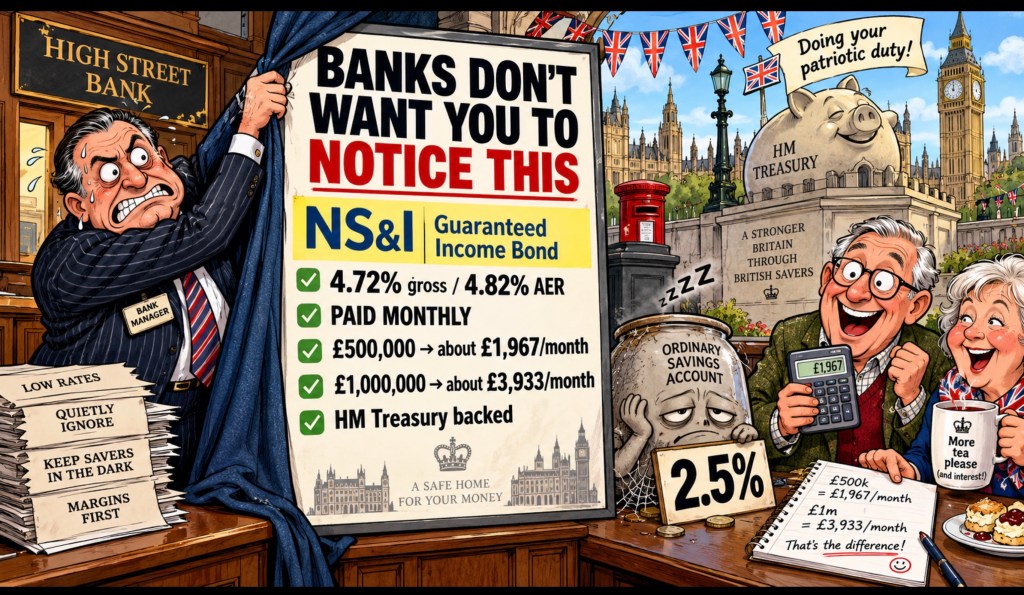
💷🏦For years, British savers have been trained like obedient Labradors:
Leave money in bank. Accept rubbish interest. Wag tail. Repeat.
Unfortunately for the banks, somebody appears to have discovered a calculator. 🧮
NS&I’s current one-year Guaranteed Income Bond pays 4.72% gross / 4.82% AER, fixed for a year — and here’s the interesting bit:
The interest is paid to you every single month. (NS&I)
🏦 The Bit Your Bank Won’t Put on a Billboard
Put £500,000 into the one-year Income Bond and 4.72% gross works out at roughly:
£23,600 a year — about £1,967 every month before tax.
Put in £1 million:
£47,200 a year — about £3,933 every month before tax. 💸
Meanwhile, leave the same £1 million somewhere paying 2.5% and you’re earning only about £25,000 a year.
That’s a £22,200 annual difference.
Or, translated into banking language:
“Thank you enormously for not shopping around.” 🥂
Banks can offer monthly-interest accounts, of course. The joke isn’t that monthly interest is some forbidden banking technology discovered underneath Stonehenge.
It’s that savers often tolerate mediocre rates without comparing what else is available.
And banks aren’t famous for ringing customers and saying:
“Hello, Margaret. We’re paying you far too little. Have you considered moving half a million quid somewhere else?” 📞😂
🇬🇧 And Apparently You’re Helping Britain Too
NS&I isn’t an ordinary bank. Money invested with it is backed by HM Treasury, and each current British Savings Bond issue allows up to £1 million per person. (NS&I)
So you can even tell yourself you’re performing a patriotic service:
earning thousands in interest while lending money to the British state.
Whether you regard that as patriotic duty or simply charging the Government interest for borrowing your money is entirely up to you. 🇬🇧💷
Given the state of the public finances, they might even send you a Christmas card.
Probably second class.
🔐 Then There’s the Protection Problem
Ordinary eligible UK bank deposits are generally protected by the FSCS up to £120,000 per person, per authorised institution. And different bank brands can sometimes share the same banking licence. (FSCS)
So somebody with £500,000 or £1 million may need several institutions if they want all ordinary bank deposits within standard FSCS limits.
With NS&I, you’re dealing with HM Treasury backing instead.
Much less financial musical chairs. 🪑💷
There is a catch: the money is locked away for the term, and the interest is taxable. (NS&I)
So don’t put the emergency boiler fund in there unless you enjoy cold showers.
The sensible idea is simple:
Keep emergency money accessible.
Put genuinely spare money to work.
And perhaps stagger one-, two- and longer-term bonds so everything doesn’t mature at once.
🔥
Challenges
🔥
Go and check your savings rate.
Right now.
Then calculate what the same money could earn at around 4.7%.
If the difference makes you swear at your banking app, we’d like to hear about it. 😂💷
👇 Tell us in the blog comments: how much is bank loyalty actually costing Britain’s savers?
Comment, like and share — especially with that friend who has £300,000 sitting in an account because “I’ve been with that bank for years.”
The best comments and financial horror stories will appear in the next issue of the magazine. 🎯📝


Leave a comment