🚨🎒At least 1,890 offences against under-13s were recorded where the alleged perpetrator was under 18—but with many police records missing the accused person’s age, the full picture cannot honestly be branded “child-on-child abuse” without stretching the evidence until it squeaks. The investigation also found 6,140 recorded offences involving sexual images of children, including making, possessing or distributing them. These are police records, not convictions, and reporting came from 33 of 43 police forces, with recording methods varying and some incidents happening near schools rather than inside them.
But even with all the caveats, one question keeps kicking the door: when a child reports sexual abuse, who makes sure they are actually safe the next school day? And who checks that the protection is more than a laminated policy gathering dust beside the fire drill poster?
The “Nothing to See Here” Academy of Institutional Shrugging
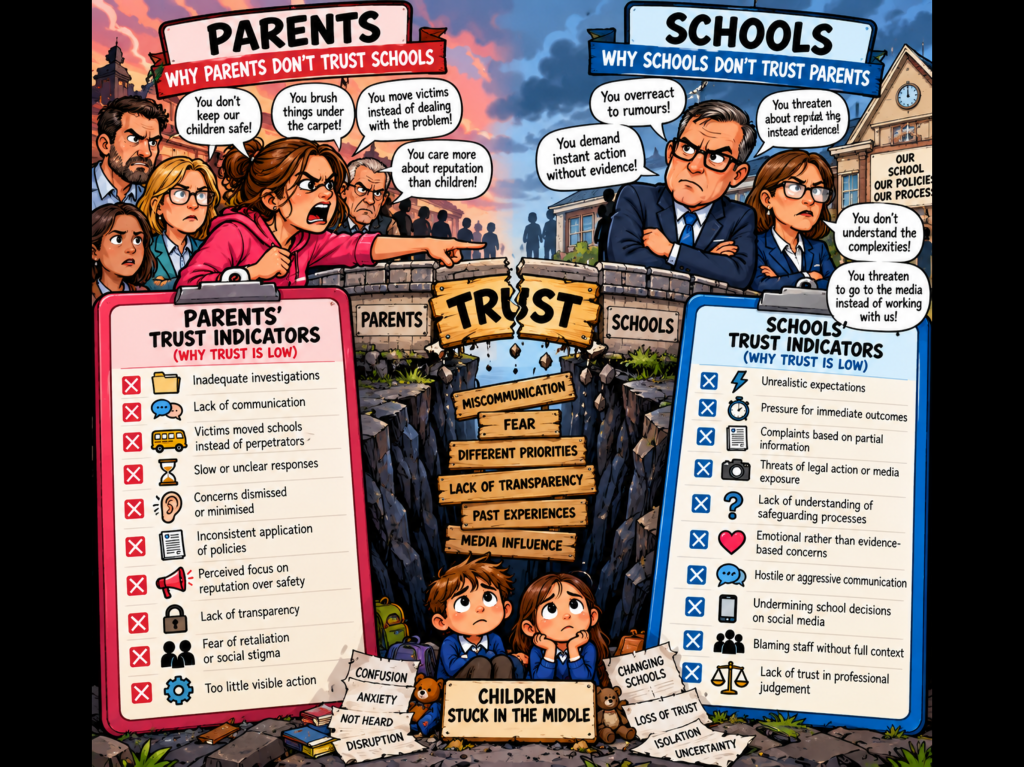
🏫🙃The horror is not just in the numbers. It is in the response. Families describe inadequate investigations, victims changing schools while accused pupils remain, and children learning the bleakest lesson of all: speak up, and somehow you become the disruption.
Ofsted warned about this back in 2021 after speaking to more than 900 young people across 32 schools and colleges. Sexual harassment and online abuse were described as so common that some children saw little point in reporting it. That sample was not nationally representative—but honestly, when young people are saying abuse feels normal, the correct response is not to stroke your chin and ask for a bigger spreadsheet. It is to act.
Because “safeguarding” cannot mean a school sends an email, opens a case file, and then hopes the victim develops the emotional stamina of a courtroom barrister by morning registration.
Children should not have to navigate corridors like crime scenes. They should not have to calculate whether reporting abuse will cost them their friendships, their education, or their safety. And they certainly should not be the ones forced to move while adults debate “process,” “thresholds,” and “complexity” like they are assembling flat-pack furniture from hell. 🔧🔥
The central accountability question is brutally simple: when a child reports sexual abuse, who is responsible for making them safe immediately—and who checks that the plan actually works?
Not eventually. Not after six meetings. Not once the reputation-management fog machine has finished pumping out “lessons will be learned.”
The next school day. That is the test. And too often, it sounds like children are being failed before the bell even rings. ⏰
🔥Challenges🔥
How many children are staying silent because they already know the system will protect the timetable before it protects them? This is the conversation that needs dragging out of the staffroom and into daylight.
Drop your view in the blog comments: are police and schools doing enough to identify victims, protect them, and deal properly with alleged perpetrators—or are too many children being left to survive the system as well as the abuse? 💬🚨
👇 Comment, like, and share. Push this where polite silence cannot bury it.
The best comments will be included in the magazine. 📝🔥


Leave a comment