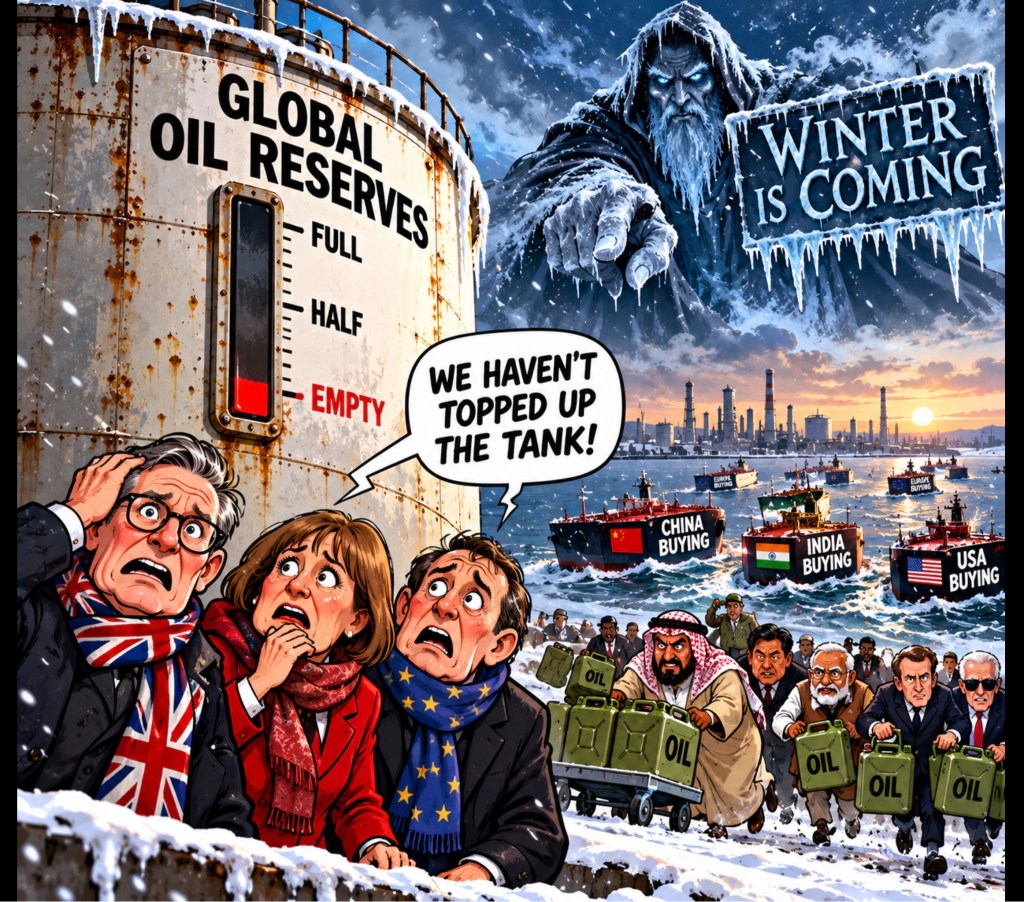
🛢️🔥The world is preparing for a scramble to rebuild oil reserves, because apparently global energy security has reached the “checking the sofa cushions for diesel” stage. Inventories are thin, emergency buffers have been drained, and governments are now eyeing crude stockpiles like nervous preppers staring at the last tin of beans before a storm. The boss of Aramco says countries have “huge plans” to rebuild stocks, while analysts warn that the next wave of buying could swallow much of the expected supply glut once war disruption eases.
The Fossil Fuel Cupboard Is Bare, and Everyone’s Pretending They Meant to Do That
⛽😬For years, the world has been told that oil is yesterday’s problem — a grimy relic, a planet-boiling inconvenience, the embarrassing uncle of the energy family.
And yet here we are, watching governments quietly shuffle toward the oil cupboard with the same guilty expression as someone who spent all week boasting about veganism before being caught face-first in a bacon sandwich.
The reserves are low. The emergency buffer is thinner. The market is twitchy. And suddenly everyone wants to rebuild stockpiles at the same time, which is always a calm and affordable thing to do in global commodity markets — much like shouting “who wants the last parachute?” on a crowded plane.
This is the awkward truth hiding behind the energy transition brochure: the world still runs on oil. Not spiritually. Not nostalgically. Actually. Ships, planes, farms, factories, logistics, armies, plastics, chemicals, freight, food supply chains — the whole modern machine still has crude oil fingerprints all over it.
So when war, disruption, underinvestment, sanctions, shipping chokepoints, and political wishful thinking collide, the result is not a smooth green utopia with scented candles and solar-powered optimism. It is governments stampeding to refill the tank before the next crisis turns the global economy into a very expensive bonfire. 🔥📉
And here comes the punchline: if everyone rebuilds reserves at once, that extra demand may help keep prices higher for longer. So the great supply glut that was supposed to bring relief could be soaked up by nervous governments restocking their emergency shelves like oil-addicted squirrels preparing for winter.
This does not mean abandoning the transition. It means admitting that transition is not the same as fantasy. You cannot drain the backup tank, neglect supply, rely on hostile regions, then act shocked when the world rediscovers the importance of having reserves.
Energy security is not a slogan. It is the boring, expensive, deeply unglamorous work of making sure the lights stay on, the trucks keep moving, and the economy does not have to queue outside the petrol station wearing a blanket and regret.
🔥Challenges🔥
Is the world finally waking up to the reality of energy security — or are governments simply panic-buying oil after years of pretending they had everything under control?
Drop your take in the blog comments. Are higher prices now baked in for years, or will the next glut calm the market before the panic merchants empty the shelves again? 💬🛢️
👇 Comment, like, and share if you think energy policy needs fewer fairy tales and a much bigger emergency cupboard.
The best comments will be included in the magazine. 🎯📝


Leave a Reply