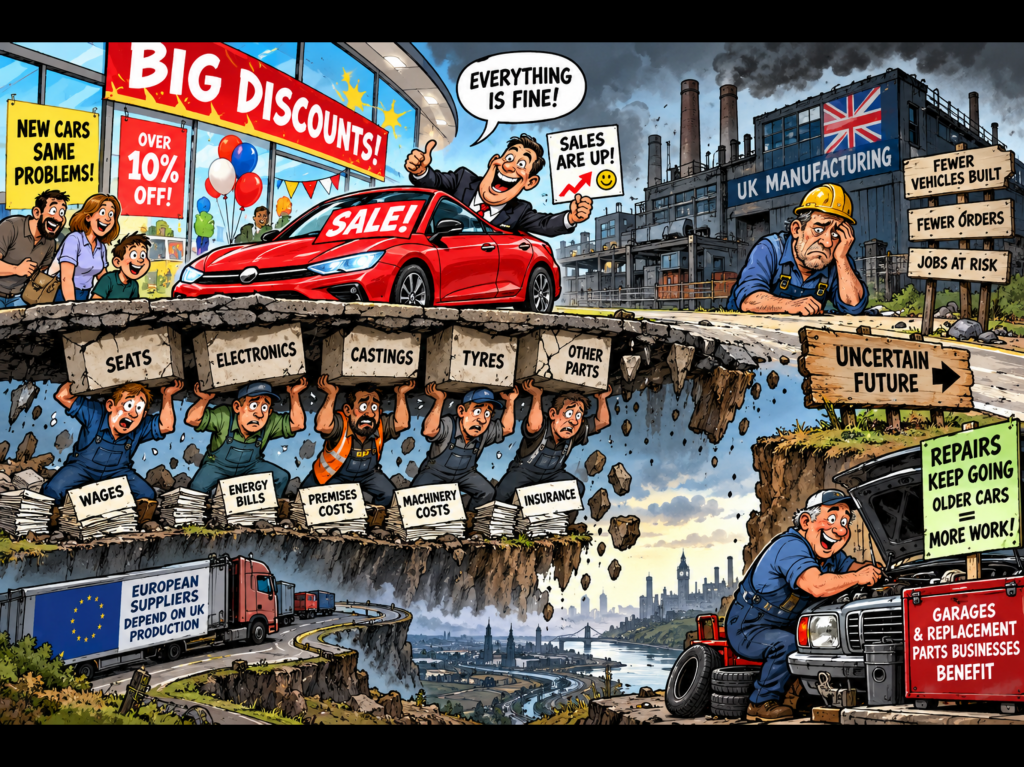
🚗⚙️Britain’s car market may look lively on the showroom floor, but behind the shiny bonnets and “limited-time offer” balloons, the supply chain is rattling like a van with three warning lights on. British factories, European component makers, local garages, parts suppliers, and overseas manufacturers are all tangled together in one giant mechanical spiderweb. When UK production weakens, the shock does not politely stop at the factory gate—it travels through suppliers, workshops, warehouses, and balance sheets faster than a finance deal with tiny print. 📉🔧
The Discount Parade Is Not the Same as a Healthy Industry
🎪🚘Yes, new cars are being sold. Yes, discounts are doing some heavy lifting. And yes, a big red sticker on a windscreen can make a struggling market look like it has suddenly rediscovered its confidence.
But let’s not mistake “people are buying because the price has been hacked down” for “everything is fine.” That is like saying a pub is thriving because it is selling pints at 40p and the landlord is quietly crying into the till. 🍺😭
The supply-chain point matters because car manufacturing is not one heroic factory magically producing vehicles out of vibes and patriotic bunting. It is seats, electronics, tyres, castings, batteries, glass, plastics, logistics, software, labour, and a thousand other moving parts—many of them coming from firms that do not have the luxury of surviving a prolonged slump with a glossy advert and a celebrity voiceover.
Fewer vehicles built means fewer orders. Fewer orders mean suppliers still have to pay wages, rent, energy bills, insurance, machinery costs, and all the other charming little expenses that arrive whether the production line is humming or sulking in silence. Smaller suppliers can feel the pain long before the public hears about a major carmaker slowing output. That is the bit often missed: the first cracks may appear in the companies making the parts, not the companies making the headlines. ⚠️
Meanwhile, older cars staying on the road creates its own strange little survival economy. Repair garages, mechanics, and replacement-parts businesses may benefit because households are holding onto vehicles longer instead of splashing out on new ones. So the industry is not simply “up” or “down.” It is more like a badly tuned engine: one cylinder firing, another coughing, and someone in a suit insisting the noise is actually innovation. 🔩😬
The real picture is uneven. Sales are being propped up by discounts, households are still under pressure, manufacturing remains weak, and suppliers may be carrying more strain than the headline sales figures reveal. Selling more cars at thinner margins does not automatically mean manufacturers, dealers, or supply-chain firms are making sustainable profits. It may just mean everyone is smiling for the brochure while quietly checking whether the wheels are still attached. 🚗💸
🔥Challenges🔥
🔥
So here is the question: are these discounts a sign of recovery, or just a shiny plaster slapped over a much deeper industrial wound? Are British factories being squeezed while suppliers take the first hit? And who really benefits when sales rise but margins shrink?
Drop your take in the blog comments—especially if you work in manufacturing, repairs, sales, logistics, or supply. We want the view from the showroom floor, the factory line, and the garage ramp. 💬🔧
👇 Comment, like, and share. Tell us whether Britain’s car industry is genuinely recovering—or just revving loudly while parked on a cliff edge. 🚨
The best comments will be included in the magazine. 📝🔥


Leave a Reply