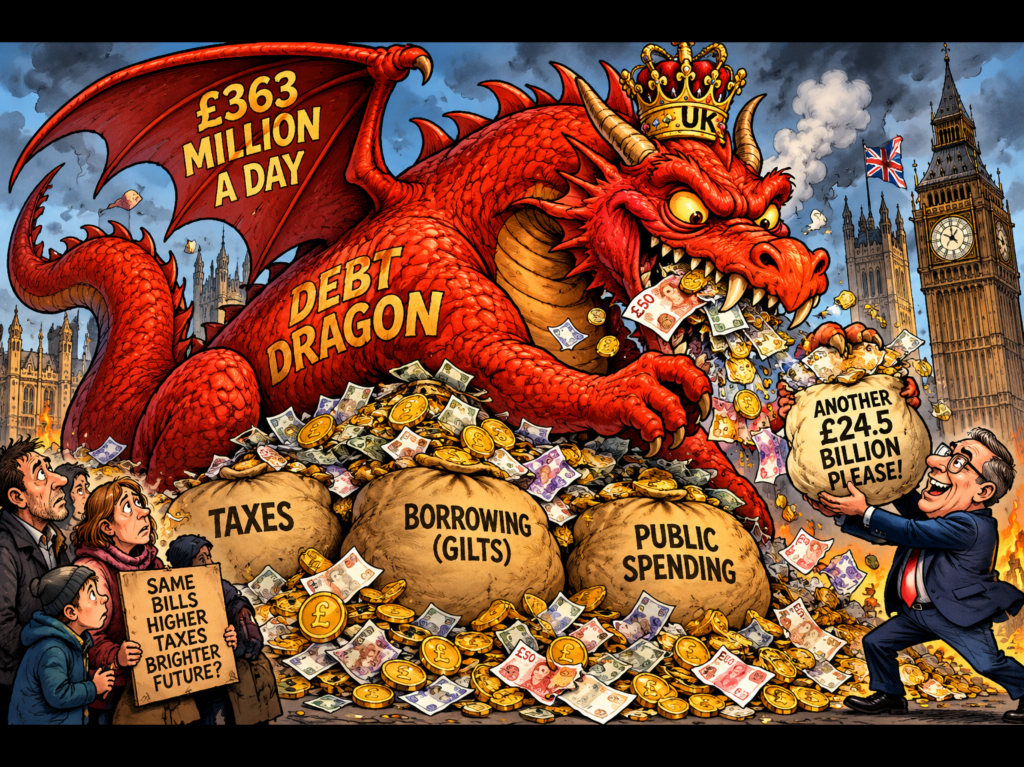
🐉💷The latest reported UK government debt-interest bill hit £10.9 billion for September 2026—about £363 million a day, because apparently money can evaporate faster than a politician’s promise near election season. That’s £1.6 billion higher than September last year, and October’s numbers are still hiding behind the curtain until 20 November. 🎭📉
The Great Treasury Soup Pot: Taxes In, Gilts Out, Panic Simmering
🍲🔥So how did they pay for this spectacular fiscal fireworks display? Simple: everything goes into one giant government pot—taxes, receipts, and whatever loose change they can shake from the sofa cushions of Whitehall. From that pot comes spending, services, salaries, and yes, the increasingly chunky bill for debt interest.
And when the pot comes up short? The government borrows. Again. Mainly by selling gilts, which is the polite British way of saying, “Dear investors, would you like to lend us money so we can keep paying for the money we already borrowed?” Very elegant. Very circular. Very “financial hamster wheel in a top hat.” 🎩🐹
Public-sector borrowing in September was £24.5 billion, which means Britain isn’t just servicing its debt—it’s servicing its debt while ordering another round on credit. There’s no special tax jar marked “interest payments,” no dusty biscuit tin labelled “for bondholders only.” It all comes from the same common pot, which is now making noises usually associated with a car engine moments before disaster.
But here’s the sneaky accounting goblin: £4 billion of that £10.9 billion was inflation added to inflation-linked bonds. It counts as an interest cost now, but the cash doesn’t actually leave immediately—it gets paid when those bonds mature. So yes, the bill was recorded in September, but not all of it was physically handed over that month. It’s less “cash out the door” and more “future bill quietly sharpening its knives in the hallway.” 🧾🔪
The practical answer? Britain is borrowing while servicing existing debt, like someone using one credit card to pay another while insisting the spreadsheet has “good vibes.” Higher interest costs mean more pressure on future budgets, fewer easy choices, and a Treasury increasingly looking like it’s trying to put out a house fire with a scented candle. 🕯️🏚️
🔥Challenges🔥
Here’s the question: how long can a country keep feeding the debt dragon before it starts asking for the furniture too? Is this just the cost of modern government, or a warning siren wrapped in Treasury jargon? Drop your take in the blog comments—rage, sarcasm, economic wizardry, or pure disbelief all welcome. 💬⚡
👇 Comment, like, and share—because £363 million a day deserves more than a polite shrug and a nervous cup of tea. ☕💣
The best comments will be included in the magazine. 🎯📝


Leave a Reply