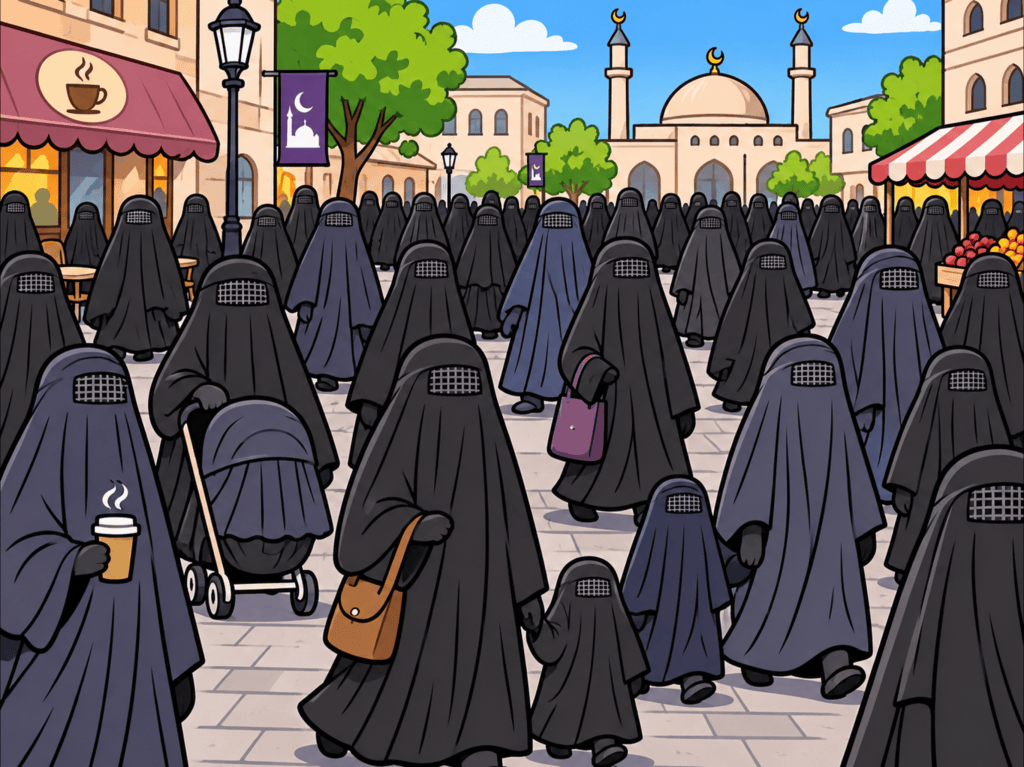
Switzerland has drawn a line over face coverings in public. Since January 2025, the country has enforced a nationwide ban, approved by voters in a 2021 referendum. Supporters see it as a defence of Swiss public customs, social openness and shared standards. Critics see it as an unnecessary restriction on religious freedom.
But behind the debate sits an uncomfortable question: When people choose to make another country their home, should they also be expected to respect its established cultural values rather than demand that every tradition they bring with them be accommodated?
🏔️ A New Country, A New Home — But Apparently the Old Rulebook Must Come Too?
Moving to another country means more than changing your postcode, exchanging currencies and discovering that the trains actually arrive on time. 🚆
It means becoming part of a society with its own history, customs, laws and expectations.
Switzerland is entitled to debate what kind of public culture it wants to preserve. Just as newcomers deserve dignity and religious freedom, the communities welcoming them deserve respect for their democratic decisions.
And here’s the question that often gets buried beneath the shouting: Why should every traditional religious practice automatically be considered beyond criticism simply because somebody describes it as sacred?
Traditions can be centuries old without being beyond question. Age alone doesn’t make a custom right, reasonable or necessary in modern society.
Many Muslim women practise their faith without covering their faces. Islamic scholars themselves disagree about whether face veiling is obligatory. So portraying the niqab as something that every Muslim woman must wear oversimplifies a diverse religion.
If young girls grow up believing that covering their faces is an unavoidable requirement of being a respectable woman, surely they deserve to hear that other interpretations exist.
But cultural integration isn’t a one-way demand for uniformity. A democracy also has to consider whether a restriction is proportionate and whether adults should retain freedom over their own clothing.
The real distinction is between respecting religious belief and treating every inherited religious custom as immune from public scrutiny.
And no, questioning a tradition doesn’t automatically mean attacking everyone who follows that religion.
And the cultural argument has a factual basis: research into the 2021 referendum found that cultural considerations and internal security were major reasons voters supported the ban.
There is a distinction between expecting newcomers to obey a country’s laws and expecting them to abandon their cultural or religious identity. Switzerland’s law applies to residents and visitors alike, not just immigrants.


Leave a Reply