Imagine receiving the worst news any parent could hear.
Your son has been murdered.
Your world has collapsed. Your family is devastated. You’re desperately trying to understand what happened in his final moments.
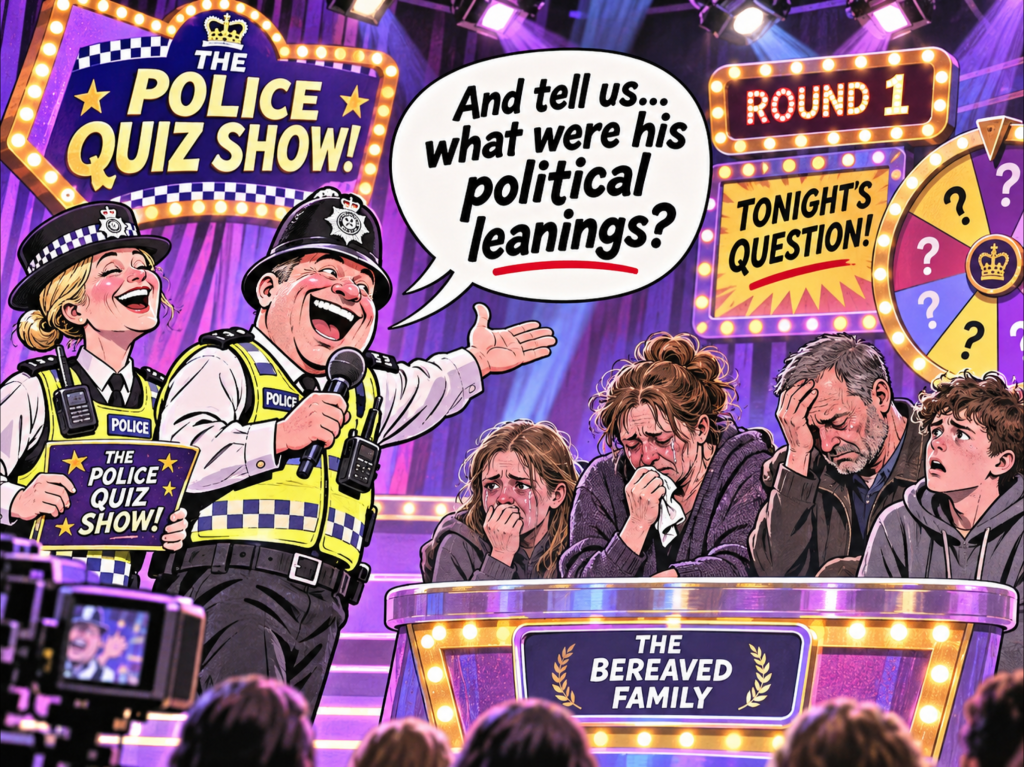
And then the police start asking about his political views.
His political views? Seriously?
Not just Henry’s, either. According to his family, officers also wanted to know about their political beliefs.
What on earth was the relevance of that question at such a moment?
Were they investigating a murder or compiling a political opinion survey?
Henry’s mother, Lucy Ross, described her disbelief at being asked such a question after learning her son had been killed.
And who could blame her?
Political beliefs can sometimes be relevant to a criminal investigation. But that doesn’t explain why these questions were put to a newly bereaved family, or whether the officers appreciated how distressing their timing could be.
And the political questions weren’t the only thing troubling the family.
According to their account, police initially suggested Henry had been the aggressor. They were told officers had immediately administered first aid, only to discover later that Henry had actually been handcuffed and arrested while dying.
His father, Mark Nowak, described how the police account changed repeatedly.
His stepmother, Katie, feared the family had been manipulated during their darkest hours.
Imagine having to fight not only for answers about your son’s murder, but also for an accurate account of how the police treated him.
The family’s allegations raise an uncomfortable question:
Were officers concentrating on establishing what happened, or were assumptions about the people involved influencing how the story was understood?
That question requires evidence, not speculation. But the family deserves a clear explanation of why political beliefs were raised and why the initial accounts of Henry’s final moments changed.
Because when parents are told their child has been murdered, they deserve compassion, clarity and the truth.
Not a political questionnaire. Not a changing story. And certainly not the feeling that their dead son is somehow the one on trial.
🔥 Challenges: Politics, Policing and the Price of the Truth
Would you consider it appropriate for police to ask about your family’s political beliefs immediately after telling you that your child had been murdered?
Could there have been a legitimate investigative reason? If so, shouldn’t the family be told what it was?
And why did Henry’s family have to endure changing accounts of what happened to him?
👇 Tell us what you think in the Chameleon News blog comments. LIKE and SHARE this article. Let’s hear your views on police accountability, compassion and equal treatment under the law.
🏆 The best comments will be featured in the next issue of the magazine.


Leave a Reply