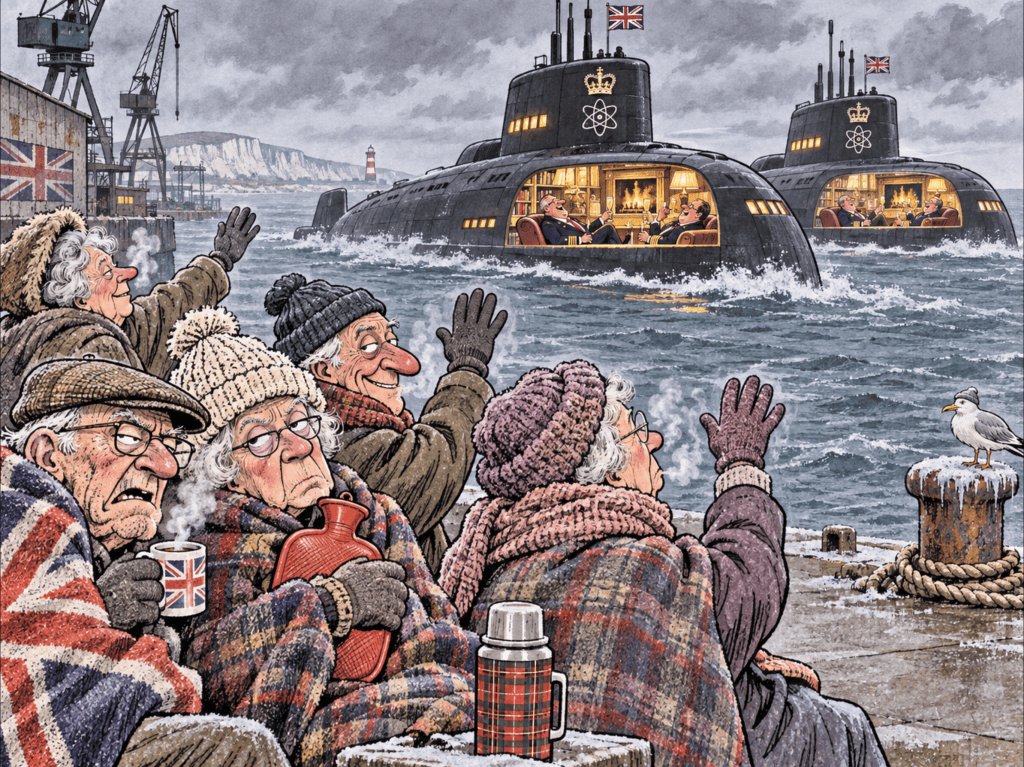
Britain is committing billions to its nuclear submarine capability, yet many British households are still struggling with the cost of heating their homes and keeping the lights on.
While Westminster focuses on international security, perhaps we should be asking some equally uncomfortable questions about energy security, corporate profits and the financial security of the British people.
🥶 War-Ready Submarines, Winter-Ready Hot Water Bottles
The government has announced an £8 billion agreement to improve Britain’s submarine maintenance and operational readiness. Meanwhile, according to the government’s own figures, household energy debt has exceeded £5 billion. GOV.UK +1
Perhaps the most immediate threat facing many British households isn’t a Russian submarine lurking beneath the North Sea, but an energy bill lurking behind the letterbox. 📬
We talk endlessly about national security, but surely that should include the ability to heat your home without experiencing a financial crisis?
What about the profits made by energy companies, the affordability of essential services and Britain’s dependence on international energy markets?
A nuclear submarine may be capable of operating beneath the ocean for months, but it isn’t much consolation to a pensioner sitting beneath three blankets in their living room.
Britain has already committed considerable resources to supporting Ukraine following Russia’s invasion. Supporters argue that this protects wider European security, but the financial consequences, risks of escalation and competing domestic priorities also deserve scrutiny.
How much further should Britain’s involvement extend, and what will the long-term cost be to the British taxpayer?
Perhaps energy independence, affordable electricity, domestic infrastructure and greater accountability for energy companies deserve an equally prominent place in our national security conversation.
After all, what does national security really mean if citizens cannot afford the basic necessities of life?
A nuclear deterrent may discourage an enemy overseas, but it certainly won’t frighten your energy supplier into reducing your direct debit. 💸
🔥 Challenges 🔥
- Should Britain’s domestic energy security take greater priority over additional military expenditure?
- Are energy companies being held sufficiently accountable for their pricing and profits?
- How far should Britain’s involvement in the conflict in Ukraine extend?
- Who ultimately pays the price for international political decisions?
Is Britain getting its priorities right, or should national security begin at home?
👇 Comment directly on our blog, like and share. Let’s hear what the British public has to say about the cost of national security and the security of their own households.
The best comments will be featured in the next issue of the magazine. 🎯📝


Leave a Reply