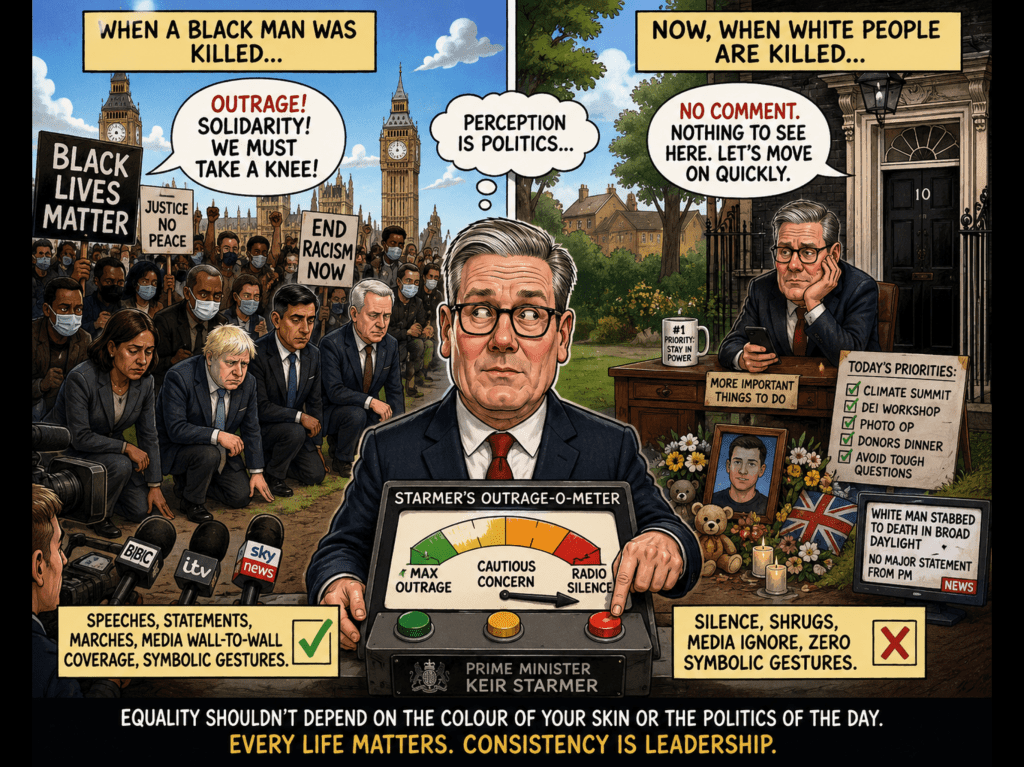
🇬🇧⚖️A fresh political row has erupted after REFORM argued that public reactions to violent deaths appear inconsistent depending on the victim and the political climate surrounding the tragedy. The claim taps into a growing frustration among many voters who feel some victims become national symbols while others fade into uncomfortable silence. Whether that perception is fair or not, it raises an awkward question for politicians: should compassion come with conditions?
🎭 Equality of Mourning… Terms and Conditions Apply?
Nothing fuels public cynicism quite like the suspicion that outrage is being rationed.
When a tragedy strikes, the public expects leaders to respond with empathy, clarity, and consistency. Yet every time politicians appear louder for one cause and quieter for another, the accusation machine roars into life. 🚨
Critics are asking why some events trigger wall-to-wall statements, social media banners, televised speeches, and symbolic gestures, while others receive little more than a carefully polished press release buried somewhere between announcements about potholes and net-zero targets.
Of course, governments insist every loss of life matters. They practically have it printed on official stationery. But voters have eyes, ears, and increasingly sceptical eyebrows. 🤨
The result is a growing belief that grief has somehow become politically curated—where the acceptable level of outrage depends on which narrative is trending this week.
And that’s the danger.
The moment people start believing that compassion is selective, trust evaporates faster than a minister’s campaign promises after election day. One victim shouldn’t matter more than another because of race, religion, class, or political usefulness. Either leaders stand against violence and injustice consistently, or they risk looking like they’re running an emotional subscription service with different membership tiers. 💳📉
🔥
Challenges
🔥
If every life has equal value, should public responses from politicians be judged by the same standard every time? 🤔
Do you think political leaders apply consistent principles when responding to tragedies, or does public pressure and media attention influence who gets the loudest support?
Drop your thoughts in the blog comments and tell us where you draw the line between genuine leadership and political theatre. 🎪💬
👇 Like, comment, and share if you think consistency matters more than slogans.
🏆 The best comments, strongest arguments, and sharpest observations will be featured in the next issue of the magazine.


 Chameleon Magazine
Leave a comment