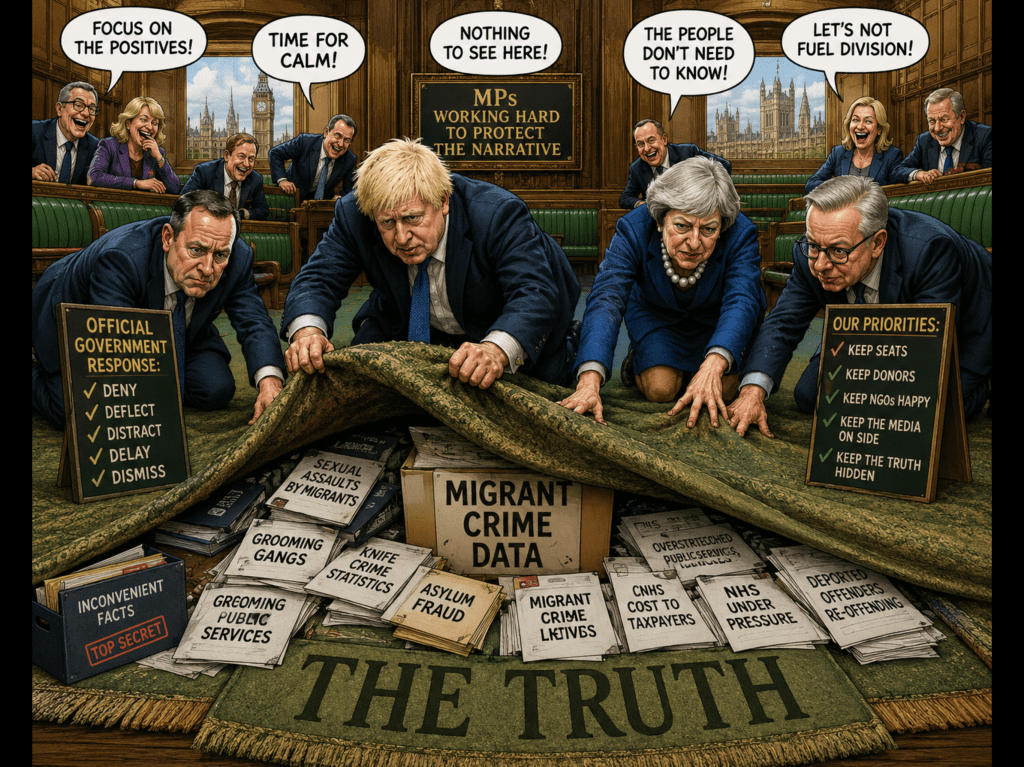
“Now is the time for calm.”
“The victim needs time to recover.”
“The police must be allowed to conduct their investigation.”
All perfectly reasonable statements on their own. Yet for many people watching from the sidelines, they sound increasingly like a script that gets dusted off after every major incident.
The public isn’t questioning whether the victim deserves time to heal. Of course he does.
They’re questioning whether the politicians demanding patience intend to use that time for anything other than issuing carefully worded statements and waiting for public anger to fade from the headlines.
People are tired of being told to stay calm while the same debates are endlessly recycled. They want answers. They want action. They want evidence that those in power are capable of doing more than holding press conferences and expressing concern.
Because from where many citizens are standing, “time for calm” has started to sound suspiciously like “time for us to do absolutely nothing and hope everyone forgets about it.”
And that is exactly why trust in politics continues to evaporate.
Critics of current policy argue that whenever concerns are raised about crime, the response is often to point out that offenders can come from any background. While that is undoubtedly true, many believe it misses the heart of the debate.
The question being asked is not whether crime exists among the native-born population. It always has, and it always will. The question is whether the government is being fully transparent about the scale, causes, and trends behind crime in modern Britain.
For years, campaigners have called for more detailed data, greater transparency, and a more honest discussion about the impact of immigration, integration, and public safety. Yet many feel that difficult questions are too often avoided rather than confronted.
This perception has fuelled growing distrust. When people believe information is being withheld, downplayed, or selectively presented, confidence in public institutions begins to erode. Whether that suspicion is justified or not, the consequence is the same: a widening gap between the public and those who govern them.
If politicians are confident that their policies are working, then they should have no fear of transparency. Publish the data. Show the evidence. Allow the public to examine the facts for themselves.
Because trust is not built through reassurance alone. Trust is built through openness, accountability, and a willingness to answer difficult questions rather than dismiss them.


 Chameleon Magazine
Leave a comment