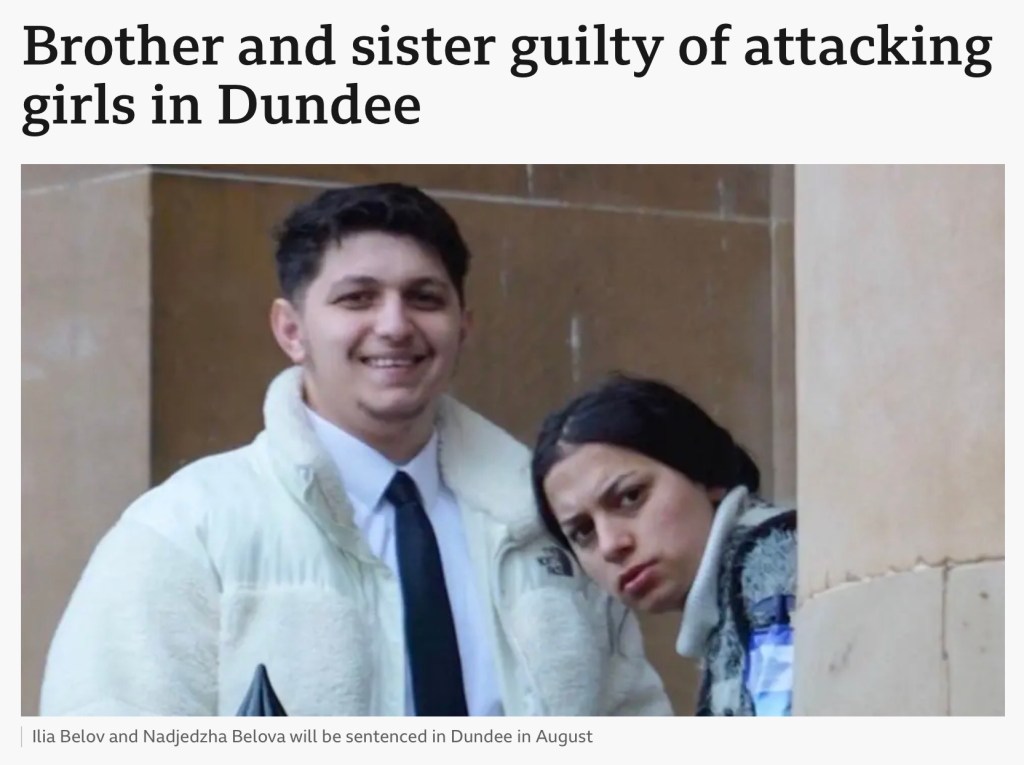
🎭📰What began as a viral outrage story has morphed into something far more uncomfortable: a public lesson in why rushing to judgment can backfire spectacularly. Recent court proceedings surrounding the Dundee incident appear to have dramatically altered how many people understand what actually happened, raising serious questions about the accuracy of early public messaging and the damage that can be done when narratives outrun facts. ⚖️💥
🚨 From “Case Closed” to “Questions Everywhere” 🚨
For months, many people thought they knew exactly what had happened. The story seemed neatly packaged, opinions were formed, social media juries had delivered their verdicts, and anyone asking awkward questions was often dismissed.
Then reality barged through the door carrying a stack of court documents. 📂😬
The proceedings reportedly resulted in convictions against Ilia Belov for making sexual remarks to underage girls, while both he and his sister were convicted in relation to assaults connected to the incident. Suddenly, the tidy public narrative started looking less like a factual account and more like a first draft that forgot to wait for the evidence.
Even more damaging was the acknowledgement that initial public information did not fully reflect the situation. That single admission landed like a wrecking ball through months of assumptions. 🏗️💣
The real scandal isn’t just what happened during the incident itself—it’s how quickly certainty was manufactured before all the facts were known.
There are echoes here of the Henry Nowak case, which many readers will remember as another example of allegations generating headlines and public outrage long before the full picture emerged. Different cases, different circumstances—but the same uncomfortable lesson. In the age of social media, accusations travel first class while the truth is often stuck waiting for a delayed bus. 🚍💨
By the time evidence is examined, witnesses heard, and facts tested, the public has often already decided who the heroes and villains are supposed to be. Reputations can be shredded in real time, while corrections and clarifications struggle to attract even a fraction of the attention the original claims received.
In the age of instant outrage, accuracy often arrives late to the party. By then, everyone has already picked teams, printed banners, and started shouting across the internet.
🔥
Challenges
🔥
If official accounts can be incomplete, how many other stories are being accepted without scrutiny? 🤔
Should public bodies face greater accountability when early statements prove misleading? Should social media users be more cautious before declaring someone guilty or innocent based on fragments of information?
Most importantly: what does justice look like when public opinion has already delivered its verdict long before a courtroom does? ⚖️🔥
Head to the blog comments and tell us what you think. Did this case expose flaws in public communication, media reporting, social media reactions—or all three? 💬👇
📢 Like, comment, and share if you believe facts should come before headlines.
🏆 The best comments, hottest takes, and sharpest observations will be featured in the next issue of the magazine.


 Chameleon Magazine
Leave a comment