A growing number of voters believe Britain is developing into a two-tier society, where different groups appear to be treated differently depending on who they are, what they believe, or which causes they support. Whether that perception is entirely accurate or not, it is becoming an increasingly powerful political force.
⚖️ When Perception Becomes Reality
Nigel Farage and his supporters argue that many ordinary citizens feel they are being punished more quickly and more severely for certain offences while others appear to receive greater leniency. They point to policing decisions, sentencing controversies, and the handling of protests as evidence that fairness is no longer being applied equally.
The government insists the law is applied impartially. Critics, however, argue that the growing number of high-profile cases and public disputes suggest otherwise.
The real danger for any government is that once people lose confidence in equal treatment under the law, trust begins to erode rapidly. 🚨
And trust, once lost, is notoriously difficult to rebuild.
🪖 The Patriotism Question Nobody Wants to Answer
Many voters also feel increasingly disconnected from political leaders who appear uncomfortable discussing national identity, patriotism, or pride in British institutions.
For some, displaying the Union Flag remains a symbol of national unity and shared history. Yet critics argue that expressions of patriotism are too often dismissed or viewed with suspicion by parts of the political establishment.
Whether that criticism is fair or not, the perception itself is politically significant. Governments depend on public confidence, particularly during periods of uncertainty.
If Britain were ever faced with a major national emergency, leaders would need widespread public support and national cohesion. That support cannot simply be switched on overnight. It must be built through trust, confidence, and a belief that the country belongs equally to everyone.
⚔️ The Mobilisation Question Nobody Wants to Ask
There is another awkward question lurking beneath the surface.
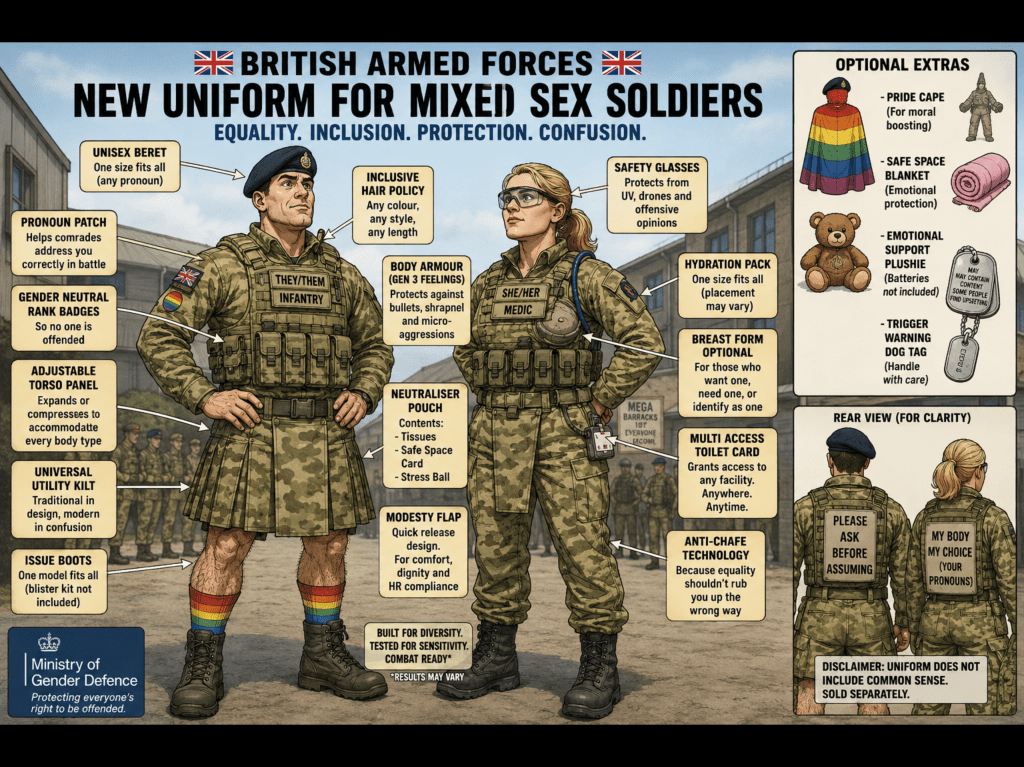
If Britain ever faced a major war and needed large-scale mobilisation, questions that politicians currently struggle to answer in peacetime would suddenly become impossible to avoid. For years we’ve been told that traditional definitions of men and women are outdated, yet institutions still rely on those distinctions for everything from accommodation to sport to prisons. The military would face similar questions. Which barracks would people be housed in? Which standards would apply? What rules would govern recruitment, accommodation and deployment?
Whether people agree or disagree with modern gender policies is beside the point. The point is that governments rarely explain how these policies would operate under the pressures of a national emergency. If ministers cannot provide clear answers now, voters are entitled to ask how prepared the country really is for a crisis.
If politicians are genuinely concerned about growing international tensions and the possibility of future conflict, how prepared is Britain really?
The armed forces already face recruitment challenges, equipment shortages and questions about readiness. Yet Westminster often appears far more interested in debating identity, of a man and a woman, how would the country actually respond if a major mobilisation became necessary, where would they place those women who believe they are men, and those who men who identify as women.
These practical questions that would once have seemed straightforward are now capable of generating endless political and legal debate. Critics argue that modern Britain sometimes appears better prepared to hold consultations and committee meetings than deal with the realities of military preparedness.
For many voters, the concern is not about how individuals choose to identify. It is whether the government has created a system so complicated that common-sense decision-making becomes increasingly difficult during a crisis. Wars are rarely won through paperwork, guidance documents and policy reviews.
If Britain ever found itself facing a genuine national emergency, voters may reasonably expect leaders to focus less on ideological disputes and more on ensuring the armed forces have the manpower, equipment, leadership and public support required to defend the nation.
🔥 Challenges 🔥
Has Britain become more divided than united?
Has public confidence in government institutions been strengthened or weakened over recent years?
And if a national crisis arrived tomorrow, do you believe Britain is prepared for it?
💬 Tell us what you think in the comments below.
👇 Like, comment and share if you believe trust in government has become one of the defining political issues of our time.
🏆 The best comments will be featured in the next issue of the magazine.


 Chameleon Magazine
Leave a comment