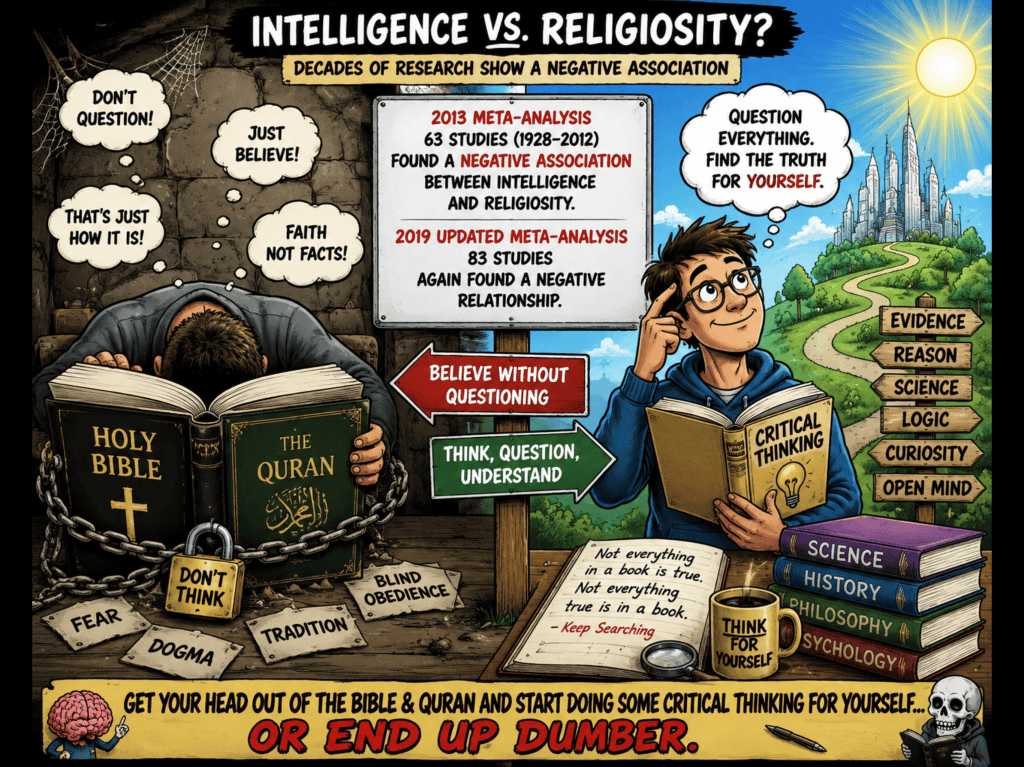
Research spanning decades has examined the relationship between intelligence and religiosity, with major meta-analyses reporting a negative association between the two.
One of the best-known studies came in 2013, when researchers Miron Zuckerman, Jordan Silberman and Judith Hall conducted a meta-analysis bringing together 63 studies published between 1928 and 2012.
Their analysis found a significant negative association between intelligence and religiosity: higher intelligence was associated with lower religiosity. 🧠📉🙏
🔬 Researchers Returned to the Question
The subject didn’t disappear after the 2013 paper.
In 2019, Zuckerman and colleagues published an updated meta-analysis incorporating 83 studies. The expanded body of research again found a negative relationship between intelligence and religiosity.
Researchers have considered several explanations for this relationship.
One proposed explanation involves analytical cognitive style. People with stronger tendencies toward analytical thinking may be more inclined to question religious beliefs and rely less on intuitive explanations.
Another proposed explanation is that intelligence may allow people to obtain through other avenues some of the psychological or social functions traditionally provided by religion.
Whatever explanation ultimately accounts for the relationship, the central reported finding of these meta-analyses is clear: intelligence and religiosity were negatively associated in the research examined. 📊
So perhaps the message is simple: get your head out of any book long enough to question what you’re being told. Whether it’s the Bible, the Quran or any other source of authority, critical thinking means examining claims rather than accepting them automatically. 🧠⚡ Think for yourself—or risk letting someone else do the thinking for you.
🔥 Challenges: Does This Research Surprise You?
Studies stretching across generations have repeatedly examined this connection—and these major meta-analyses found a negative association.
👇 What do you make of the findings? Drop your reaction in the blog comments, like the post and share it with someone who’ll find the research interesting. 💬🔥
The best comments will be included in the magazine. 🎯📝


Leave a comment