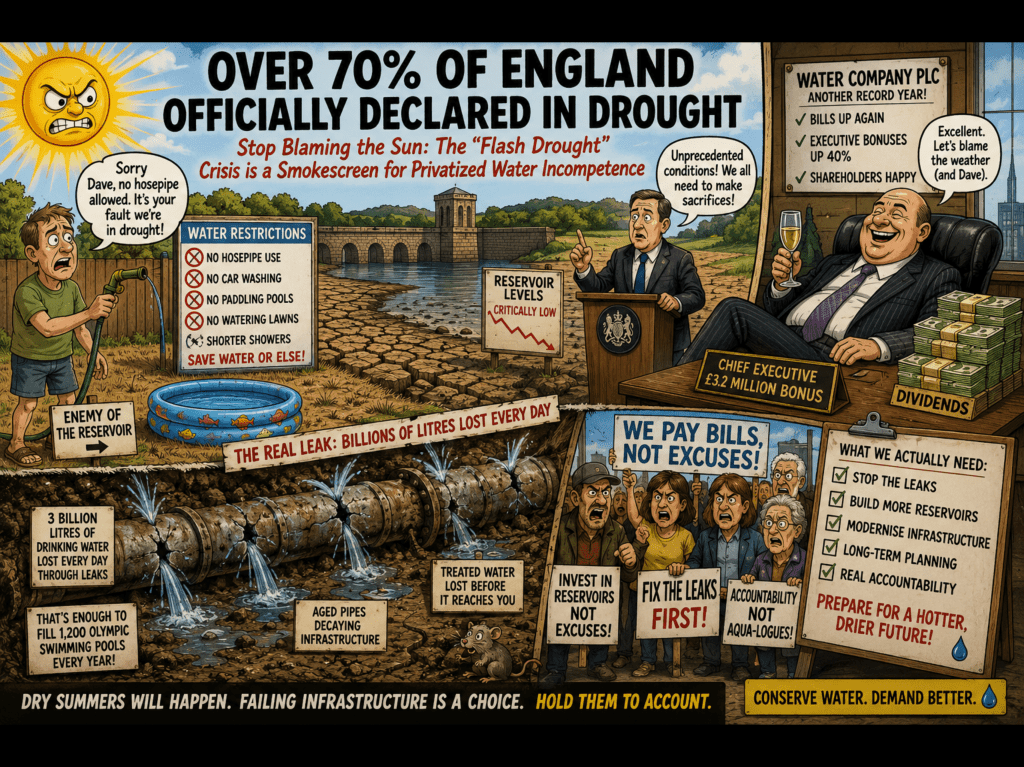
💧🚫🌞Almost three-quarters of England is in drought, with millions facing water restrictions after a very dry summer. The official explanation is simple: too little rain and high temperatures.
Fair enough — you can’t invoice the clouds. 🌧️
But the problem didn’t appear overnight. Alongside the weather sits a less visible issue: ageing infrastructure, major leakage, rising demand, and a system long warned it needs more resilience.
So while households are told to stop using hosepipes, the pipes under the streets are still worth a closer look.
🚿Britain’s Summer Tradition: The Hosepipe Ban
Sunshine? ☀️
Barbecue? 🍔
No rain for a few days?
HOSEPIPE BAN ACTIVATED. 🚨
Suddenly, watering a lawn feels like a criminal act.
A child’s paddling pool becomes “irresponsible use of resources.”
Meanwhile, significant amounts of treated water are still lost through leaks before reaching homes.
That’s where the argument gets uncomfortable.
Yes, drought is real. Yes, people should avoid wasting water. But responsibility can’t sit only with households while system-wide losses continue.
Britain has debated reservoirs, leakage and long-term supply for years — yet dry spells still expose the same weaknesses. 💧🤡
Think of it like a restaurant with holes in every drinks barrel:
“Sorry, we’re out of beer.”
“What about the beer pouring across the floor?”
“CLIMATE CHANGE. PLEASE DRINK LESS.” 🍺
🌧️Two Things Can Be True
Drought and infrastructure failure are not opposites.
Hotter, drier conditions increase pressure on supply and water companies are still expected to reduce leaks and invest for the future.
Both matter.
But it’s easier to blame garden hoses than explain why a famously wet country keeps running short of water. 🌧️➡️💧
🔧The Real Question
Hosepipe bans make the public part of the solution:
- Don’t water lawns
- Don’t wash cars
- Take shorter showers
All sensible during shortages.
But the harder question remains:
Why is so much treated water still being lost through leaking infrastructure? 💦
Climate change deserves attention. So does personal responsibility. But neither should hide long-term system failures.
If extreme weather is becoming normal, then “unprecedented” can’t be the only response.
We need systems built to cope with it.
🔥Final Question🔥
When water runs short, who carries more responsibility — households or the companies managing supply?
Household conservation is necessary.
But so is serious investment in leaks, reservoirs and resilience.
That’s the real debate.
👇 Join the discussion: is Britain’s water crisis about climate, infrastructure, consumption — or all three combined?
💬 Comment, share, and argue your case. The best responses will be featured in the magazine.


Leave a comment