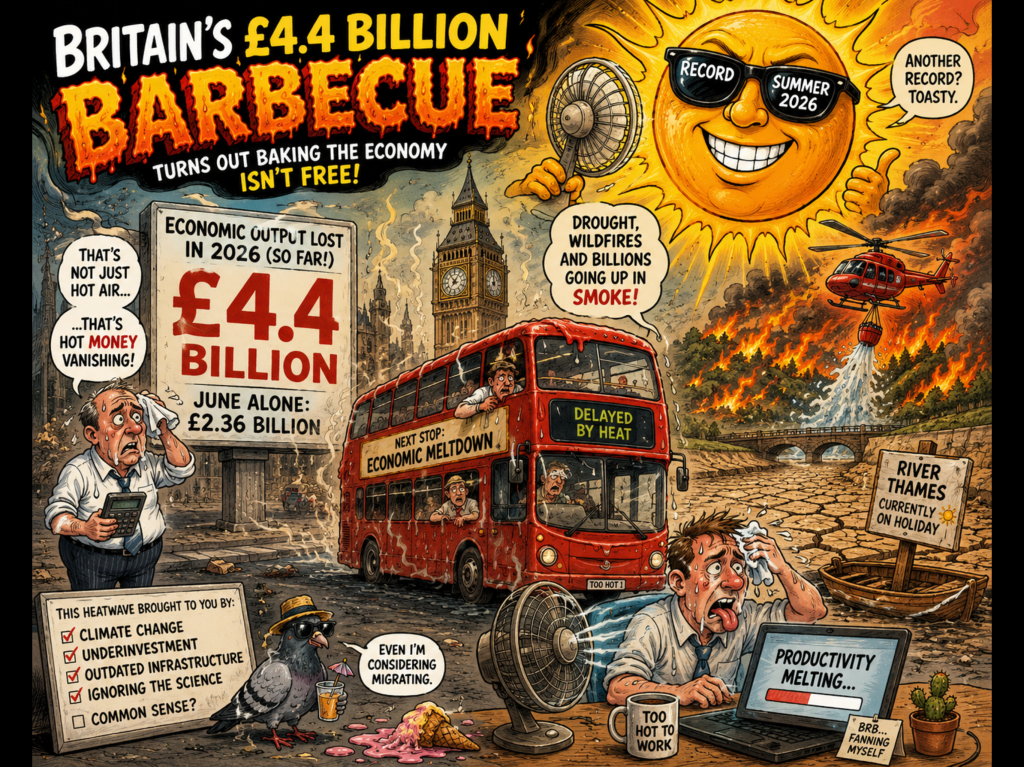
🔥💷Britain’s endless 2026 summer heatwaves have reportedly come with a rather less Instagrammable accessory: an estimated £4.4 billion in lost economic output by the end of July, according to analysis from green thinktank Verdant. June alone is estimated to have accounted for £2.36 billion as extreme heat hammered productivity and infrastructure. (The Guardian)
Meanwhile, drought is spreading, wildfires are adding another headache, and the Met Office says summer 2026 is on course to become the UK’s warmest summer on record, potentially overtaking the record set only last year. (Arab News)
☀️ Welcome to Britain’s Most Expensive Staycation Ever
Remember when a British heatwave meant buying a disposable barbecue, complaining that the bedroom was “a bit stuffy,” and watching someone named Darren turn the colour of a supermarket rotisserie chicken?
Those were simpler times. 🍗
Now apparently we’re running the national economy through an industrial-sized air fryer.
Workers struggle in buildings designed to retain heat, infrastructure gets pushed beyond comfortable limits, drought squeezes water supplies, and wildfires provide the sort of dramatic backdrop normally reserved for disaster films.
And somehow we still discuss extreme heat as though the main national emergency is whether the local Tesco has run out of Soleros. 🍦🚨
The particularly spicy detail is the bill: £4.4 BILLION.
That isn’t somebody’s theoretical 2050 spreadsheet. It’s an estimate of economic output already lost during 2026. Verdant warns that annual heat-related economic losses could reach £25 billion by 2030 if current trends continue. (The Guardian)
Suddenly climate resilience starts looking less like an expensive environmental luxury and more like basic economic maintenance.
Britain spent centuries perfecting buildings capable of surviving drizzle. Unfortunately, nobody ticked the box marked “What happens when July becomes an outdoor pizza oven?” 🍕🌡️
The wider evidence isn’t exactly reassuring either. The UK’s latest climate-risk assessment says very hot days above 30°C have already become more than three times as frequent, while the probability of Britain exceeding 40°C in any given year has risen substantially compared with the 1980s. (Met Office)
So perhaps the question isn’t whether adapting to extreme heat costs too much.
Perhaps it’s how many billions we intend to flambé before adaptation starts looking cheap. 🔥💰
🔥Challenges🔥
£4.4 billion gone in the heat — and we’re not even through August.
Should Britain introduce maximum workplace temperatures? Retrofit buildings? Spend heavily on shade, trees and heat-resistant infrastructure? Or are we destined to tackle climate adaptation using the traditional British emergency response of opening a window and saying, “Blimey, it’s warm today.” 😅🌡️
We want your verdict — drop it in the blog comments. 💬
👇 Comment. Like. Share. And tell us what Britain should actually be doing before the next billion pounds evaporates.
The best comments, arguments and spectacularly savage observations will be included in the magazine. 🎯📰


Leave a comment