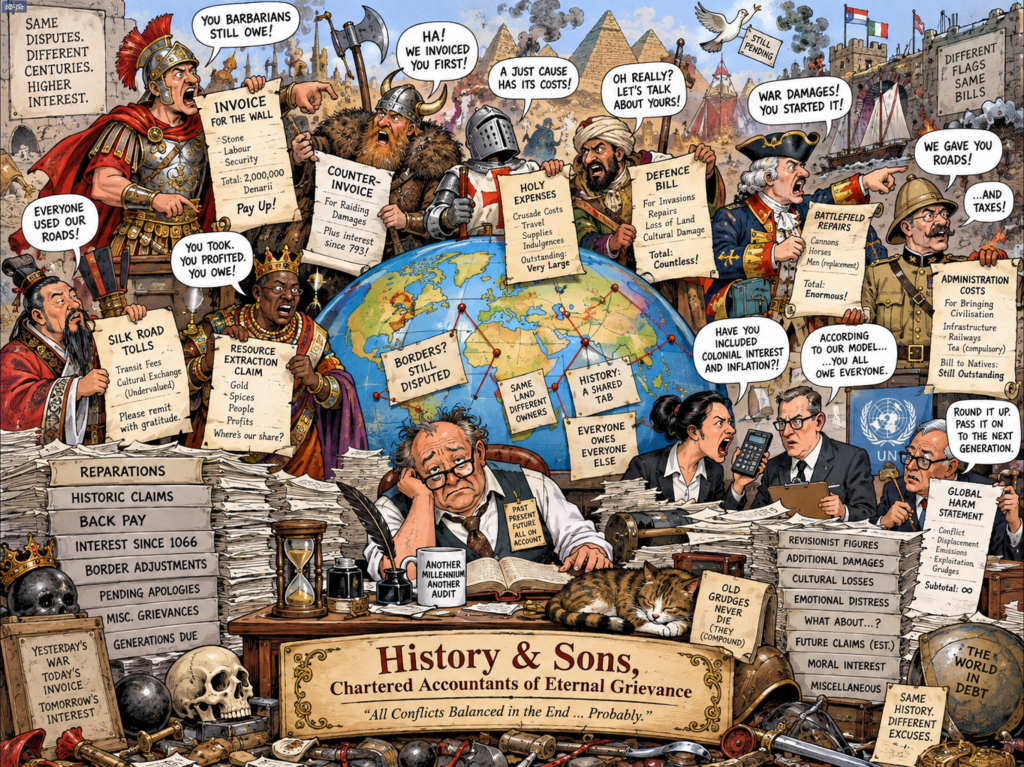
🧾🏰💣Britain has spent much of the last two thousand years conquering, being conquered, fighting, taxing, invading, withdrawing and drawing borders—then occasionally apologising for them.
So if we reopen the historical accounts, perhaps we should do the bookkeeping properly.
Welcome to History & Sons, Chartered Accountants of Eternal Grievance, where no invasion is too ancient and no descendant too distant to receive an invoice. 📚💷
🧮Congratulations, Humanity — Your Ancestors Have Left You a Bill
Britain’s historical ledger is undeniably complicated. Rome occupied Britain, the Vikings raided it, the Normans conquered England, and later European powers threatened or attacked the country. Britain was both victim and aggressor long before the modern state existed.
The same pattern appears across Europe. England and France fought for centuries, while religious conflicts produced persecution, executions and confiscations on all sides. The Napoleonic Wars and two world wars added further layers of destruction.
Then comes empire.
British rule in India and Africa involved conquest, racial hierarchy, repression, economic extraction and catastrophic policy failures. The Great Famine in Ireland, Amritsar, exploitative taxation and imperial violence cannot be dismissed or sanitised. Britain also played a major role in the slave economy, even though it later devoted substantial naval resources to suppressing the Atlantic slave trade.
Mandatory Palestine adds another complicated file. Britain made conflicting commitments, failed to reconcile competing national movements and withdrew in 1948 amid escalating violence. British policy deserves scrutiny, but assigning Britain sole responsibility for every later development is not serious historical analysis.
These histories matter. Victims should be remembered, atrocities examined and institutions held accountable where appropriate.
But once history becomes an invoice rather than something to understand, the spreadsheet starts breeding.
If every past injustice creates a permanent hereditary liability, who pays for the Vikings? Who compensates the descendants of those conquered by Rome or the Normans? Who pays the descendants of people killed in religious wars, imperial conflicts or twentieth-century invasions?
And who pays the descendants of ordinary people who suffered under governments they did not choose and decisions made centuries before they were born?
At some point, the International Ministry of Historical Invoicing discovers the flaw in the system:
almost everybody eventually appears on both sides of the ledger.
Britain was an imperial power. It conquered, exploited and committed acts of cruelty and repression. Pretending otherwise is dishonest.
But Britain was also invaded, raided, bombed and economically drained by wars, while generations of ordinary people had little or no influence over the actions now attributed to them by inheritance.
History should be remembered, studied and criticised. Yet turning centuries of conquest, famine, slavery, migration and warfare into one giant hereditary invoice produces an absurd conclusion:
eventually, everybody owes everybody else. 🧾🌍
🔥Challenges🔥
Where should historical responsibility end and inherited financial liability begin?
Should modern taxpayers pay for actions committed centuries before their grandparents were born, or would that create an endless chain of invoices nobody can settle?
And if we opened the books on every conquest, raid, famine, war, occupation and act of enslavement, who would still have a positive balance?
💬 Drop your verdict in the blog comments. Agree, disagree, dismantle the argument or bring your own historical invoice.
👇 Comment. Like. Share. And tag someone who would happily spend six hours arguing about the Normans.


Leave a Reply