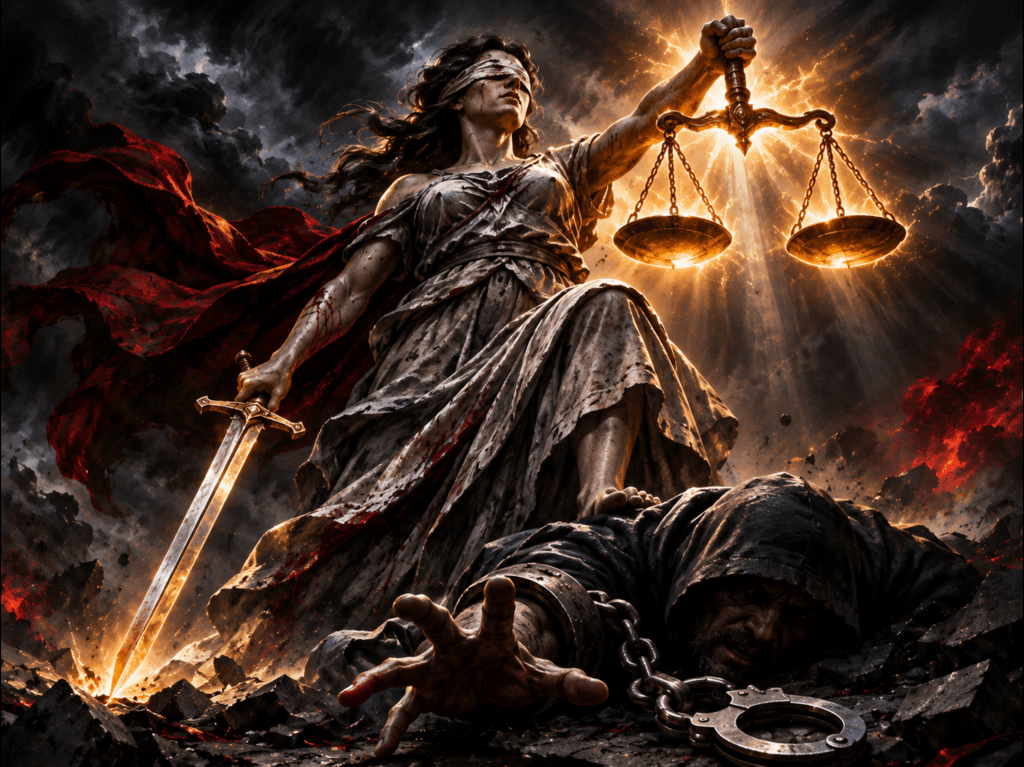
An 18-year-old university student lay dying after being brutally stabbed by a stranger. Instead of helping him, his killer filmed his suffering. And when police arrived, the young victim was handcuffed rather than immediately receiving the emergency medical care he desperately needed.
On 5 November 2026, the Court of Appeal increased Vickrum Digwa’s minimum prison term from 21 to 25 years for the murder of Henry Nowak in Southampton. Digwa remains sentenced to life imprisonment, and even after 25 years, release will depend on a Parole Board decision.
But while the courts have delivered a tougher punishment, a far more uncomfortable question is hanging over Britain’s justice system: How many opportunities were missed to save Henry’s life, and who will be held accountable?
📱 Murder on Camera, Handcuffs for the Victim: Has Common Sense Left the Crime Scene?
There are stories so disturbing that satire almost feels redundant. This is one of them.
Henry Nowak was just 18. A first-year university student with friends, family, ambitions and a future that should have stretched decades ahead of him.
Instead, on 3 December 2025, he encountered Vickrum Digwa, a stranger carrying a large dagger.
What followed was horrifying. Henry was repeatedly stabbed, including in the chest. Then, rather than attempting to save the life he had just destroyed, Digwa filmed the injured teenager as he struggled and lay dying.
Apparently, even a young man’s final moments weren’t enough to interrupt the modern obsession with pointing a camera at human suffering.
A mobile phone was available. Compassion apparently wasn’t.
And then came the police response.
Henry, critically wounded, told officers he had been stabbed and could not breathe. Yet he was arrested and handcuffed instead of immediately receiving the urgent medical assistance his condition demanded.
Two officers subsequently came under investigation by the Independent Office for Police Conduct for potential gross misconduct. The investigation concerns, among other matters, their recognition of Henry’s injuries, their response to his requests for help and their decision to handcuff him. These are allegations under investigation, not established misconduct findings.
🚨 The bitter irony? The murderer was lying about what happened, while the dying victim was telling officers he needed help.
You could write a fictional police drama with that plot, and viewers would complain it was too unbelievable.
But this wasn’t television. This was a young man’s life.
And now we have the familiar machinery of institutional accountability: investigations, reviews, reports and promises that lessons will be learned.
On 26 October, Home Secretary Shabana Mahmood announced an independent review led by former Lord Chancellor Alex Chalk KC. It will examine what authorities knew about Digwa in the five years before Henry’s murder, whether warning signs were missed and how Henry’s family were treated afterwards. Its first phase is expected to report by March 2027.
That review matters. But Britain has heard the phrase lessons will be learned so many times it could practically be printed on government stationery.
Lessons are only meaningful when they lead to action.
The increased sentence is a significant judicial decision, reflecting the seriousness of the murder and the deliberate cruelty that followed. But punishment for the killer cannot answer every question about the wider circumstances.
If warnings were ignored, why? If emergency care was delayed, how? If procedures failed, who takes responsibility?
Accountability cannot begin and end at the prison gates.
Henry’s family deserve more than sympathetic speeches, carefully worded statements and another report gathering dust in an expensive government filing cabinet.
They deserve answers, transparency and meaningful change.
Because the real measure of a justice system isn’t just how severely it punishes a murderer.
It’s also how seriously it investigates its own possible failures when an innocent person needed protection. ⚖️💔


Leave a Reply