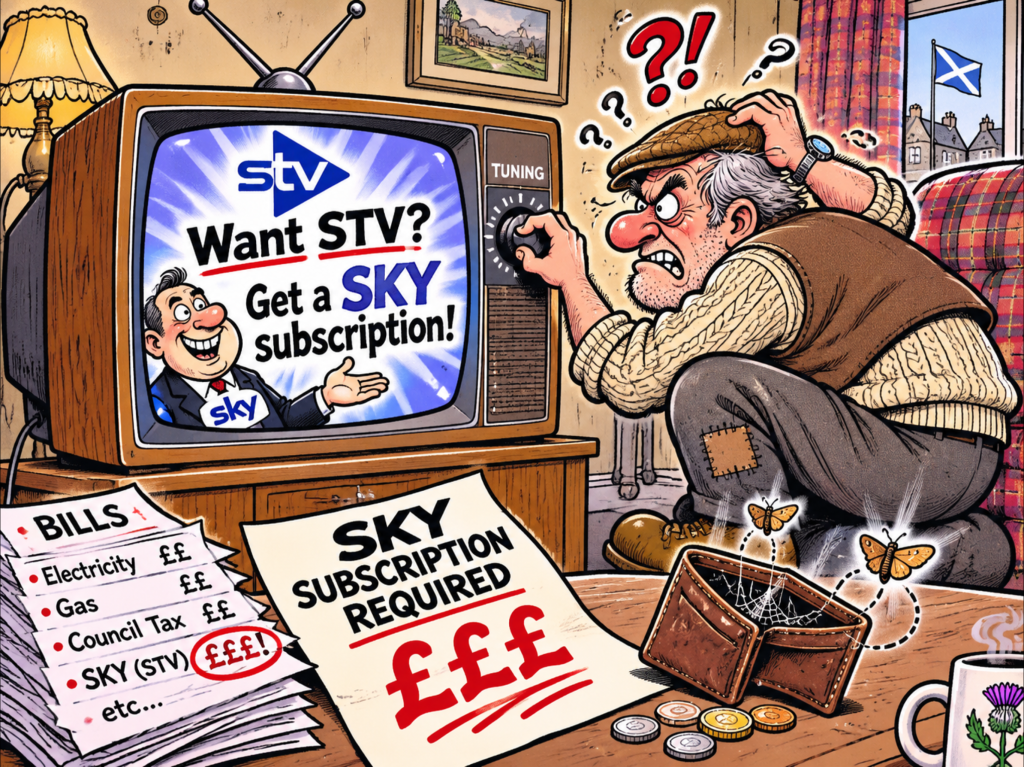
Sky wants to take over ITV’s television channels and streaming business in a whopping £1.6 billion deal. But there’s a rather awkward question hanging over Britain’s broadcasting future: Who gave the television giants permission to decide what the nation watches, and who gets to influence what it hears?
Culture Secretary Lisa Nandy has ordered Ofcom and the Competition and Markets Authority to investigate the proposed takeover, raising concerns about media ownership, freedom of expression and the diversity of news and programming.
The regulators must report by 27 January 2027. The takeover has not yet been approved.
And with Sky owned by American media giant Comcast, concerns about potential foreign influence have added another dimension to the debate. But fears of Donald Trump interfering with British broadcasting remain concerns, not established evidence of interference.
🎭 Welcome to SkyTV Britain: One Remote, One Empire, and Your Opinion Sold Separately!
Remember when British television had something resembling a choice?
BBC, ITV, Channel 4, Channel 5 and Sky. Different channels, different identities, different ways of telling the nation what was going on.
Now imagine popping the kettle on, switching on ITV and discovering that another enormous chunk of Britain’s broadcasting landscape belongs to the same corporate family.
How wonderfully convenient! ☕📺
It’s the television equivalent of walking into five different supermarkets and discovering that four of them are owned by the same company, selling the same biscuits, while insisting you’re absolutely spoilt for choice.
Sky argues that combining its business with ITV would create a stronger British competitor to global streaming giants such as Netflix. It also promises to protect ITV’s identity, public-service responsibilities and the separate editorial voices of ITV News and Sky News.
Fair enough. Competing with international streaming companies is a genuine commercial challenge.
But since when did competing with Netflix automatically mean giving one company even greater influence over Britain’s television screens?
Competition is supposed to create more choice, not simply build a bigger throne for the company holding the remote. 👑
And here’s where things get particularly interesting.
ITV isn’t just another collection of entertainment programmes, celebrity contests and weather forecasts.
It’s part of Britain’s broadcasting heritage. Its news coverage, regional programming and public-service obligations matter to millions of viewers.
The proposed transaction covers ITV’s broadcasting and streaming operations, including ITVX, but not the separate production company ITV Studios.
That distinction matters. But so does the question of who ultimately controls the channels.
🇺🇸 Uncle Sam, Donald Trump and the British Television Remote
There is also a wider concern about foreign ownership and political influence.
Donald Trump does not need to appear on every British news bulletin for people to wonder whether American corporate ownership could create pressure on editorial decisions.
But ownership is not proof of political interference, and any allegation of influence needs evidence.
The real question is whether British broadcasters would retain meaningful editorial independence, regardless of who owns them.
Because the last thing viewers need is a television news bulletin that resembles a corporate press release wearing a respectable suit.
And let’s not forget: British viewers are citizens, not merely advertising targets with sofas. 🛋️💷


Leave a Reply